Bull Lake Cabin in Troy, Montana

How to Plan the Perfect Winter Cabin Vacation in Montana
After three decades of welcoming guests to Montana’s winter wonderland at Bull Lake, I’ve learned that the difference between a magical cabin getaway and a stressful ordeal comes down to one thing: preparation. The families who arrive well-prepared for Montana’s winter experience unforgettable weeks of crystalline air, snow-draped pines, and silence so profound it feels like nature’s own meditation.
Bull Lake, nestled in northwest Montana near Troy, offers authentic winter solitude with reasonable accessibility. Whether you’re dreaming of a romantic escape, family adventure, or simply reprieve from daily chaos, this guide covers everything you need to plan winter cabin vacation Montana-style—from understanding weather patterns to packing emergency supplies, budgeting realistically to creating flexible itineraries.
Understanding Montana’s Winter Season and Why Bull Lake Shines
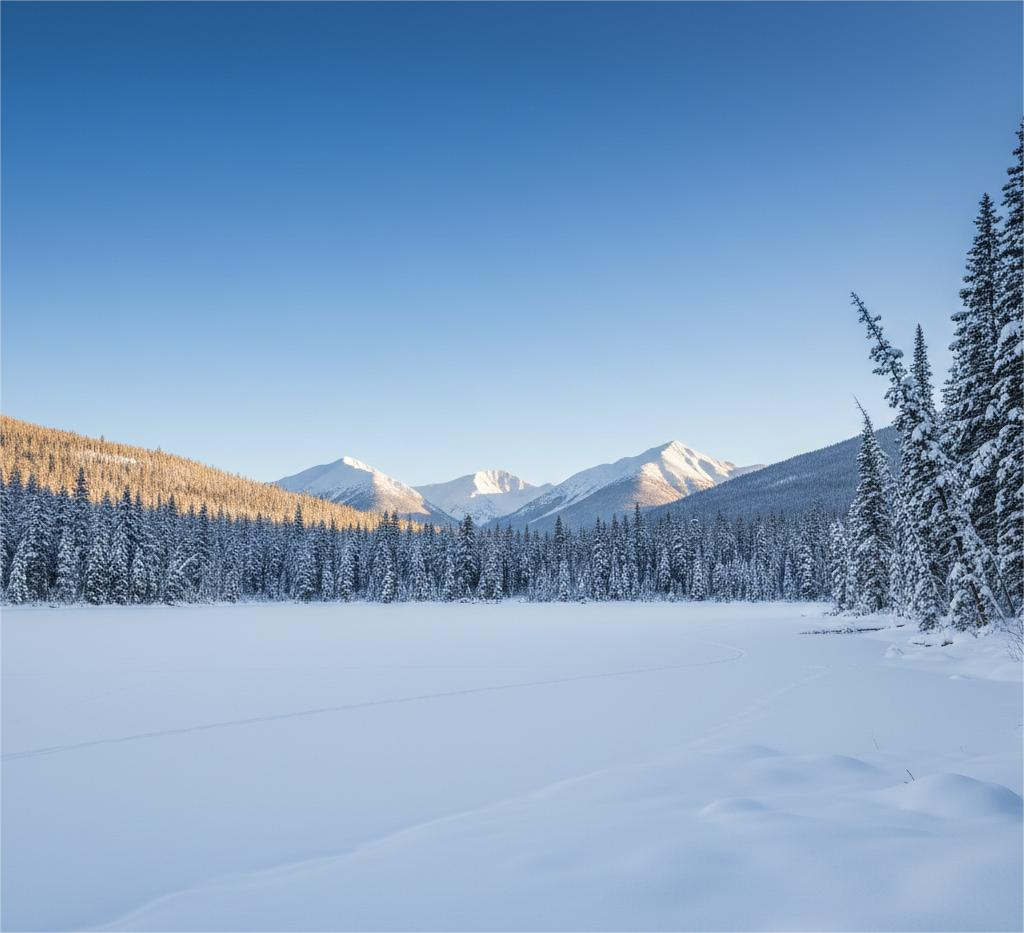
Montana’s winter season operates on its own schedule. While winter officially begins late December, serious snow conditions can arrive as early as October and last through May. The sweet spot for planning winter cabin vacation experiences runs from late December through early March, when snow conditions are reliable, daylight hours gradually increase, and the landscape achieves that picture-perfect winter aesthetic.
Bull Lake’s microclimate in the Kootenai National Forest region provides substantial snowfall—typically 80 to 150 inches annually—without the extreme temperature swings found on Montana’s eastern plains. Winter temperatures generally hover between 15°F and 35°F during the day, occasionally dipping to -10°F during cold snaps, but rarely reaching the -40°F extremes other parts of the state experience.
According to the Montana Department of Natural Resources and Conservation, the region’s water resources and winter conditions vary significantly by elevation and location, making local knowledge invaluable. February through early March represents prime time for what I call “Goldilocks conditions”—not too cold, not too unpredictable, with enough daylight for outdoor activities but sufficient darkness for spectacular stargazing.
The Complete Winter Cabin Planning Timeline
One of the most common questions I field: how far in advance should I book a winter cabin? For prime winter weeks—Christmas through New Year’s, President’s Day weekend, or school vacation periods—book your winter cabin rentals Montana property six to nine months in advance. I’ve had families returning to our Bull Lake cabin for 15+ years who book their next stay before leaving their current one.
For flexible dates in January or late February, three to four months’ notice sometimes works, but this is increasingly rare as winter cabin vacations surge in popularity.
Your winter cabin booking guide timeline: Six months before your trip, secure lodging and research activities. Browse family-friendly Bull Lake cabin rentals for children or lakefront Bull Lake rentals for couples. Three months out, book guided activities—ice fishing, snowmobile tours, snowshoe excursions. Thirty days before, finalize your packing list and vehicle situation. Two weeks before, check property-specific details with your host. One week out, create your grocery list and monitor weather. Forty-eight hours before departure, confirm reservations, check Montana Department of Transportation road conditions, and notify someone of your itinerary.
Your Essential Winter Cabin Packing Guide
The winter cabin packing list balances preparation with practicality. Here’s what you really need:
Clothing Strategy: The Layer Gospel
Forget single bulky coats. Montana winters demand sophisticated layering. Base layers should be merino wool or synthetic moisture-wicking material—never cotton, which retains moisture and causes hypothermia. Mid-layers provide insulation: fleece, down vests, wool sweaters. Outer shells must be waterproof and windproof.
Pack multiple sets of everything. You’ll need at least three pairs of wool socks per person daily—they’ll get wet. Insulated, waterproof boots rated to -20°F are non-negotiable. Bring multiple hats, neck gaiters, and several pairs of gloves—having backups prevents wet gear from derailing your day.
Emergency and Safety Equipment
Winter cabin safety tips begin with redundancy. Pack headlamps with extra batteries, battery banks for phones, emergency candles, and a first-aid kit with frostbite and hypothermia treatments. Keep emergency supplies in your vehicle: blankets, high-calorie food, water, sand or kitty litter for traction, snow shovel, ice scraper, and jumper cables.
Include a weather radio—cell coverage is spotty, and emergency broadcasts matter during storms. The National Weather Service preparedness guide provides baseline information, though Montana-specific considerations apply.
Comfort and Entertainment
Books, board games, puzzles, and downloaded entertainment make the difference during cozy evenings. Montana winters are conducive to slowing down and reconnecting. Pack materials for activities you never have time for: that novel, journal, or creative project.
Preparing for Montana Winter Road Conditions
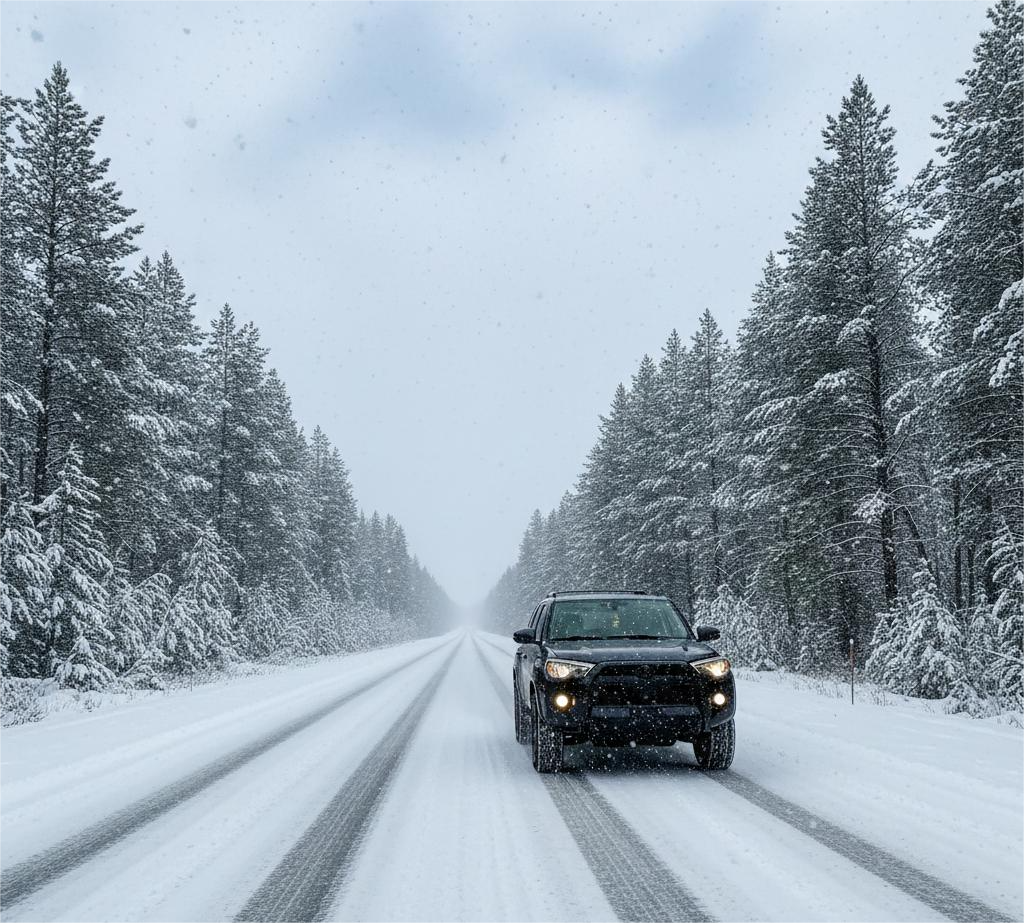
Montana winter driving tips aren’t suggestions—they’re survival skills. Should I rent a 4WD vehicle? Yes. Without qualification, yes. All-wheel or four-wheel drive isn’t about normal conditions; it’s about managing when conditions suddenly aren’t normal.
Do you need snow tires or chains? Ideally, both available. Snow tires should be standard November through March. They’re manufactured with compounds that remain pliable in cold, providing significantly better traction. Chains should be in your trunk—Montana law allows chain requirements during severe weather.
Highway 2 near Bull Lake is generally well-maintained, but snow accumulates faster than plows can clear it. Black ice forms unexpectedly. Wildlife appears suddenly on winter roads. Reduce your normal speed by 25%. Increase following distance to eight to ten seconds. Accelerate and brake gently. If sliding, ease off the accelerator and steer where you want to go—resist slamming brakes.
What’s the closest airport to Bull Lake? Glacier Park International Airport in Kalispell (100 miles south) or Spokane International Airport in Washington (180 miles west). Many guests fly into Spokane and drive to Bull Lake—three to three-and-a-half hours in good conditions. In winter, budget an extra hour. Can I arrive late at night in winter? You can, but I don’t recommend it. Winter mountain driving is exponentially more challenging in darkness.
Provisioning Your Cabin Stay: The Winter Grocery Strategy
Your winter cabin grocery list should prepare for potential isolation. While Troy has grocery options, a storm could make roads impassable for 24 to 48 hours.
Start with proteins that store well: frozen meats, canned fish, dried beans, eggs. Carbohydrates become crucial in cold weather—your body burns more calories. Stock pasta, rice, potatoes, bread, and hearty grains. Winter is the season for soups and stews, so bring appropriate ingredients.
Choose hardy fresh produce: carrots, cabbage, apples, oranges, winter squash. These withstand temperature fluctuations. Frozen vegetables are ideal—they’re preserved and the freezer maintains them perfectly.
Don’t forget comfort foods: hot chocolate, coffee, tea, marshmallows, graham crackers, popcorn, cookies. Include cooking oils, spices, and condiments. Beverages matter—dry winter air and indoor heating create dehydration. Bring more water and juice than seems necessary.
For a week-long stay, plan as if feeding your group for 10 days. This builds in buffer for appetite changes, extra guests, or weather delays.
Budget Planning: Real Costs and Hidden Expenses
How much does a winter cabin vacation cost? A moderate winter cabin vacation budget for a family of four planning a week at Bull Lake typically ranges from $2,500 to $4,500, all-inclusive.
Prime holiday weeks command premium rates—sometimes 50% higher than mid-January. Accommodation might run $250-400 per night peak season, $175-275 shoulder season. That’s $1,225 to $2,800 for seven nights.
Transportation adds significantly. Airfare to Spokane or Kalispell varies from $300 to $800 per person. Rental vehicles cost $80-150 daily ($560-1,050 weekly) for 4WD/AWD. Fuel adds $150-250.
Food for a week costs $600-900 for four people cooking mostly at the cabin. Montana has no sales tax, which helps dining budgets.
Activities vary tremendously. Snowmobile rentals: $200-300 per day per machine. Guided ice fishing: $400-600 full day. Snowshoe rentals: $20-30 daily per person. Multiple guided activities add $500-1,500.
Hidden expenses include chains ($100-200), additional cold-weather gear ($200-500), and emergency supplies. Is travel insurance recommended for winter trips? Absolutely. For a $3,000-4,000 trip, insurance typically costs $150-300. Montana winter travel tips always include this—weather cancellations, road closures, and medical emergencies are real risks.
Safety and Emergency Preparedness
How do you prepare for a winter storm? Monitor weather constantly using apps like Weather Underground for hyperlocal forecasting. Check forecasts morning and evening. Understand the difference between winter weather advisory, winter storm watch, and winter storm warning.
When storms approach, ensure you have sufficient firewood, food, water, and medications for three days. Charge all devices. Fill bathtubs with water in case power loss affects the well pump. Know where the cabin’s water shut-off is located. Move your vehicle to safe parking.
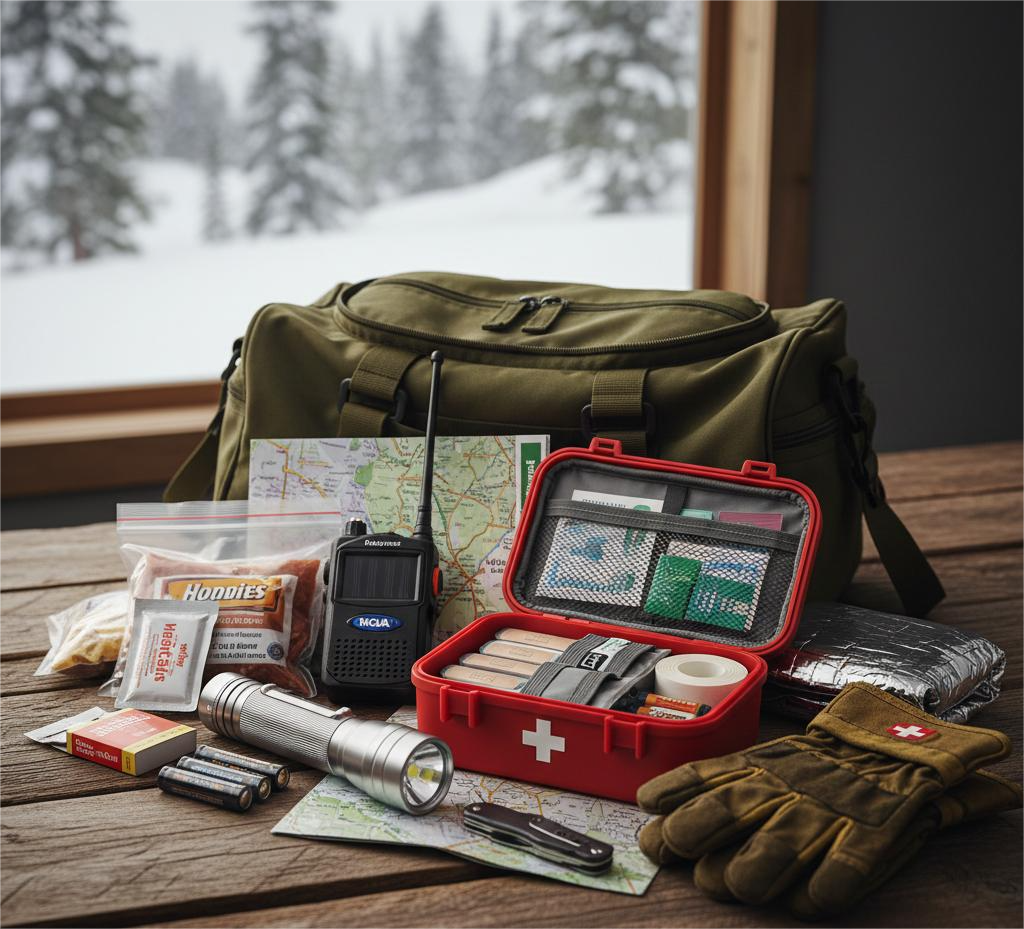
What emergency supplies should I bring? Carbon monoxide detector, battery-powered radio, emergency contact list on paper, basic tools (duct tape, zip ties, cordage, multi-tool), plastic sheeting, chemical hand warmers.
Are there nearby medical facilities? The nearest hospital is in Libby, Montana (30 miles south, 35-45 minutes in good conditions). Troy has a medical clinic for non-emergencies. Cell phone coverage is spotty—don’t rely on it.
Is it safe to travel with kids in winter? Absolutely, with appropriate precautions. Children are more susceptible to hypothermia and frostbite. They need more frequent warming breaks and careful clothing attention.
Creating Your Perfect Winter Itinerary
A cabin vacation itinerary winter should account for Montana’s short daylight hours. In January, you have roughly 8.5 hours of daylight. Plan active outdoor activities for sunlit hours, reserving evenings for cabin-based activities.
Build weather contingencies into every day. For each planned activity, have a backup option for poor conditions. Should you book activities in advance? For guided activities, absolutely. For self-guided activities, maintain flexibility—Montana weather can shift hourly.
Montana cabin vacation tips: Always schedule at least one completely unstructured day. The best vacation memories often emerge from unplanned moments—the moose that appeared at dawn, impromptu snowman building, the discovered sledding hill.
Frequently Asked Questions
When is the best time to visit Montana in winter? Late December through early March, with February offering the best balance of reliable snow, increasing daylight, and stable temperatures.
What should I pack for a Montana winter cabin? Layered clothing systems (wool/synthetic base, insulating mid-layers, waterproof outer layers), multiple gloves and socks, -20°F rated boots, hats, emergency supplies, entertainment, and personal items.
What groceries should I bring for a week? Plan for 10 days’ worth including proteins, carbohydrates, hardy vegetables, fruits, dairy, cooking essentials, snacks, beverages, and comfort foods.
What’s the check-in process like in winter? Most offer flexible check-in, but arrive during daylight (before 5 PM) to navigate unfamiliar snowy roads safely.
What’s the cell phone coverage like? Spotty throughout Bull Lake. AT&T and Verizon are most reliable, but dead zones exist. Don’t rely on phones for navigation or emergencies.
What emergency supplies should I bring? Flashlights, extra batteries, emergency blankets, hand warmers, weather radio, backup charger, first aid kit, non-perishable food, water, medications. Vehicle kit: blankets, food, water, sand, shovel, jumper cables.
What’s the cancellation policy for bad weather? Varies by property—review when booking. Most reputable operators work with guests when severe weather creates safety concerns. Travel insurance covers many situations.
What’s the average temperature in winter? Daytime: 15°F to 35°F. Nighttime: 0°F to 20°F. Cold snaps can bring -10°F to -20°F briefly.
How much does a winter cabin vacation cost? Family of four, week-long stay: $2,500-4,500 all-inclusive (lodging, transportation, food, activities).
What documentation do I need for the rental? Valid ID, signed rental agreement, payment information, emergency contacts. Some properties require damage waiver forms.
Your Winter Adventure Awaits at Bull Lake
After guiding hundreds of families through this process, the guests who have extraordinary experiences share common traits: thorough planning, flexibility, respect for Montana winter conditions, and embracing cabin life’s slower pace. Success isn’t measured by cramming in activities, but by how deeply you connect with place, companions, and yourself.
Bull Lake in winter offers authentic escape into a landscape that demands your presence. You can’t half-attend to Montana winter; it requires full awareness and respect. In return, it gives experiences that recalibrate your sense of beauty, peace, and possibility.
Start planning early, book your winter cabin vacation in Montana well in advance, and approach the adventure with thorough preparation and openness to magic. The snow-laden pines, crystal air, and profound silence are waiting at Bull Lake. Our family has shared this special place for decades, and we’d be honored to help make your winter cabin dreams reality.
The perfect Montana winter cabin vacation happens through thoughtful planning, realistic expectations, proper preparation, and willingness to embrace whatever weather presents. Plan well, pack smart, drive safely, and come ready to create memories that will warm you through many winters to come.