Bull Lake Cabin in Troy, Montana

Glacier National Park draws over 3 million visitors a year — and most of them are chasing the same handful of cabin rentals within 15 minutes of the West Glacier entrance. That means sky-high prices, fully booked calendars, and the kind of crowded “wilderness experience” that feels more like a hotel lobby than Montana.
But here’s what seasoned Glacier travelers already know: Northwest Montana is enormous, stunningly beautiful, and filled with cabin rentals that offer something the park-adjacent properties can’t — real space, actual privacy, and the kind of quiet that brought you to Montana in the first place.
This guide covers every zone where you can base a Glacier National Park trip, from the cabins right at the doorstep to the hidden lakefront retreats that most visitors never discover. We’ll be honest about distances, upfront about trade-offs, and specific about what each area delivers.
Whether you’re planning your first Glacier trip or your tenth, finding the right cabin starts with knowing your options.
How to Think About “Near” Glacier National Park
Montana doesn’t work like the rest of the country. In a state where the nearest grocery store might be 30 miles away and people routinely drive two hours for dinner, “near” means something different.
Glacier National Park itself spans over 1,500 square miles with entrances on both the west and east sides. Where you stay depends on what you want to see, how much you want to spend, and whether you care more about proximity or experience.
Here’s how we break down the lodging zones around Glacier:
Zone 1 — Park Adjacent (0–15 minutes from an entrance): West Glacier, East Glacier, St. Mary. Maximum convenience. Maximum price. Minimum availability.
Zone 2 — Glacier Gateway Towns (15–45 minutes): Columbia Falls, Whitefish, Kalispell, Coram. Strong balance of access and amenities. Still competitive on pricing and booking windows.
Zone 3 — Greater Northwest Montana (1–2.5 hours): Bull Lake, Libby, Troy, Eureka, Flathead Lake’s west shore. The best value, most space, and deepest wilderness experience. Ideal for travelers on extended trips who want to explore all of Northwest Montana — not just the park.
None of these zones is universally “best.” The right one depends entirely on your priorities.
Zone 1: Cabins Right at the Park Entrance
West Glacier
West Glacier is ground zero for Glacier National Park access. It sits at the western terminus of Going-to-the-Sun Road, and most visitors enter the park from here.
What you get: Walk-to-the-entrance convenience. Restaurants, gear shops, and outfitters within a few minutes. Raft trips on the Flathead River launch nearby.
What you give up: Privacy, space, and value. West Glacier cabin rentals during peak season (late June through September) routinely top $300–$500+ per night for modest accommodations. Many are small — sleeping 2–4 guests in tight quarters. Availability evaporates months in advance.
Best for: Short trips (1–2 nights) focused entirely on the park. Solo travelers or couples who want to maximize park time and minimize driving.
Properties to look for: West Glacier Cabins on the Flathead River, Apgar Village Lodge cabins inside the park, Glacier Outdoor Center rentals, and various VRBO/Airbnb options along Highway 2.
East Glacier and St. Mary
The east side of Glacier is less visited but arguably more dramatic. St. Mary sits at the eastern end of Going-to-the-Sun Road, while East Glacier serves as the gateway to Two Medicine and the park’s southern reaches.
What you get: Fewer crowds, direct access to Many Glacier (widely considered the park’s most scenic valley), and proximity to the Blackfeet Reservation’s cultural experiences.
What you give up: Dining options are limited. Services are sparse. The east side’s season is shorter — snow closes many roads and facilities earlier in fall.
Best for: Hikers targeting Many Glacier, Iceberg Lake, or Two Medicine. Repeat visitors looking for a different perspective on the park.
Zone 2: Glacier Gateway Towns
Whitefish
Whitefish is the most polished town in the Glacier corridor. It has a walkable downtown with restaurants, breweries, and shops, plus Whitefish Mountain Resort for skiing.
What you get: The most “complete” town experience near Glacier. Excellent dining, nightlife, and a lively arts scene. About 30–35 minutes to the West Glacier entrance.
What you give up: Whitefish knows what it’s worth. Cabin and vacation rental pricing rivals some West Glacier options. The town is busy in summer — if you came to Montana for solitude, this isn’t quite it.
Best for: Travelers who want an active basecamp with things to do beyond the park. Families who need reliable restaurant options and grocery stores.
Columbia Falls and Coram
Columbia Falls sits right along Highway 2, roughly 15–20 minutes from the West Glacier entrance. Coram is even closer — essentially the last community before the park.
What you get: The closest cabin options outside the park at better prices than West Glacier proper. Columbia Falls has a solid main street with restaurants and services. Coram puts you within a 10-minute drive of the entrance.
What you give up: Less charm than Whitefish. The immediate area around Highway 2 is more utilitarian than scenic in some stretches.
Best for: Families and groups who want easy park access without the premium pricing. A strong middle-ground option.
Kalispell
Kalispell is the Flathead Valley’s largest city and the location of Glacier Park International Airport (FCA).
What you get: The most services — big-box stores, medical facilities, and the widest dining selection in the region. About 30–35 minutes to West Glacier.
What you give up: Kalispell feels more like a small city than a mountain retreat. It’s functional, but it doesn’t deliver the cabin-in-the-woods atmosphere most travelers are looking for.
Best for: Travelers who need full services, families with young children, and those arriving late and needing a first-night stop before heading to their final destination.
Zone 3: The Northwest Montana Backcountry
This is where the Glacier experience changes entirely.
Most travelers never look beyond Zone 1 and Zone 2 because they assume Glacier National Park is the only reason to visit Northwest Montana. But the region surrounding the park — the Cabinet Mountains, the Kootenai National Forest, the rivers and lakes of Lincoln County — is the kind of Montana that existed long before Glacier became a destination.
Bull Lake and the Cabinet Mountains
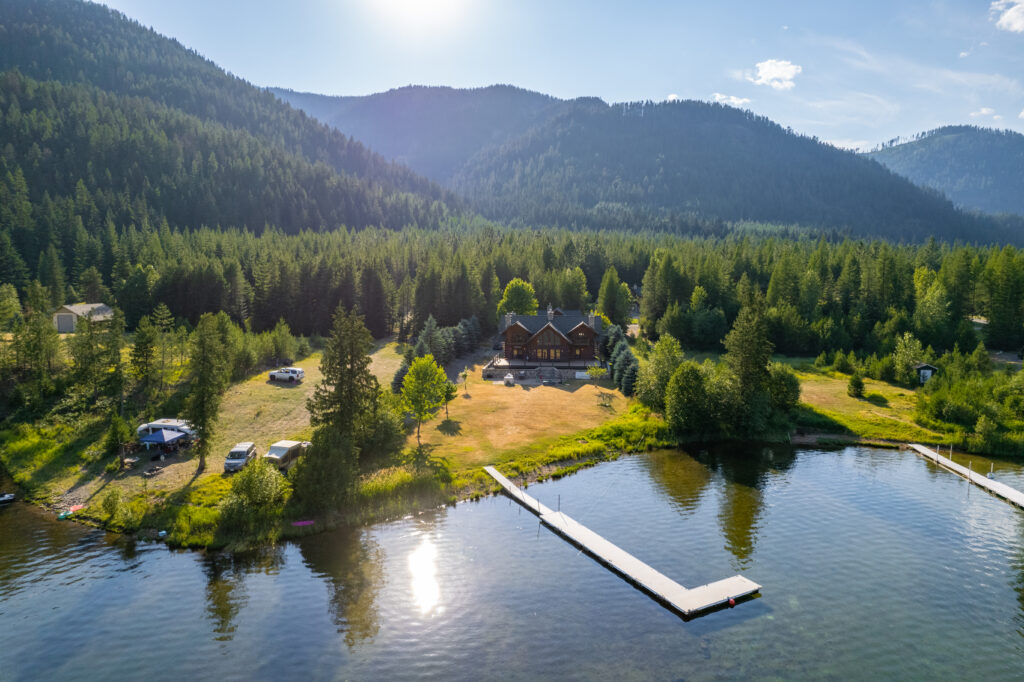
Bull Lake is a pristine mountain lake tucked into Lincoln County, about two to two and a half hours west of Glacier’s West Entrance via Highway 2. The drive itself is one of the most scenic stretches of road in Montana, following the Kootenai River through canyon country and small mountain towns.
What you get: True lakefront cabin living. The kind of space, privacy, and wilderness that Glacier-adjacent properties simply cannot provide. Bull Lake offers private dock access, mountain views in every direction, and a pace of life that feels like Montana at its most authentic. Nearby attractions include Kootenai Falls (Montana’s largest undammed waterfall), Ross Creek Cedars (a grove of thousand-year-old trees), and the Cabinet Mountains Wilderness.
What you give up: You’re not going to walk to Glacier from here. A day trip to the park requires planning and a 2–2.5 hour drive each way. This is a basecamp for exploring all of Northwest Montana over a longer trip, not a one-night crash pad before a sunrise hike.
Best for: Extended trips of 4+ nights where you want to split your time between Glacier, local lakes and rivers, and genuine Montana wilderness. Large groups and families who need space — Bull Lake cabin properties tend to be significantly larger and more affordable per person than anything near the park. Travelers who’ve “done” Glacier before and want to discover what else Northwest Montana offers.
A Personal Connection to Glacier
For the family behind Shangrilog, one of Bull Lake’s premier cabin properties, Glacier National Park isn’t just a nearby attraction — it’s part of their heritage. Their great-grandfather helped build Going-to-the-Sun Road, the 50-mile engineering marvel that winds through the heart of the park. That road, completed in 1933, is the very one millions of visitors drive every year.
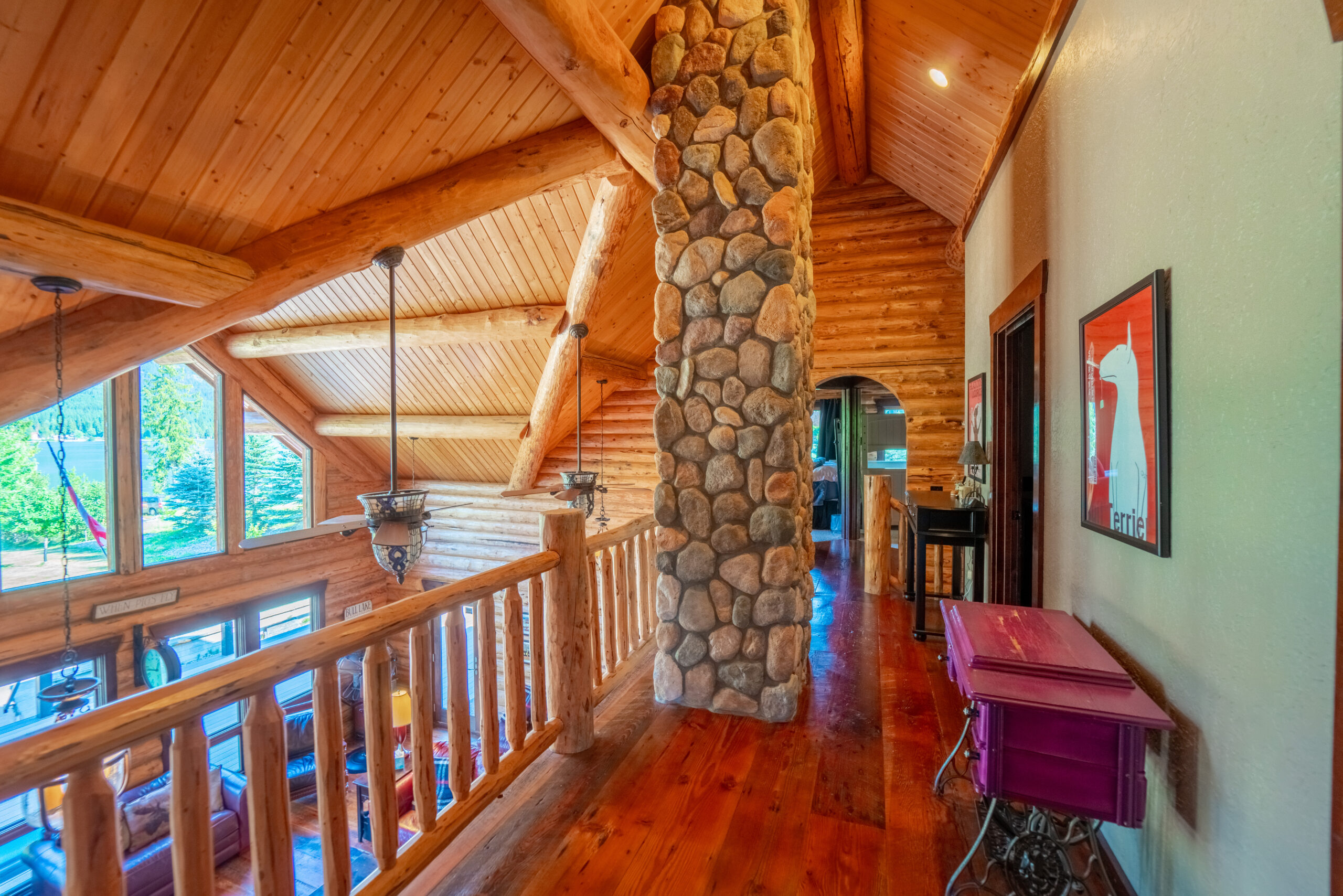
Shangrilog itself is a 3,000-square-foot handcrafted log home built by an Amish craftsman, sitting on 85 feet of private Bull Lake shoreline. With four bedrooms, three and a half bathrooms, and room for up to 10 guests, it delivers the kind of Montana cabin experience that Zone 1 and Zone 2 properties rarely offer — private dock access, a fully equipped kitchen, wraparound mountain views, and space to actually breathe.
Book your stay at Shangrilog →
Libby and Troy
These two small mountain towns — Troy is the county seat of Lincoln County, and Libby is its largest community — sit along Highway 2 between Bull Lake and Glacier.
What you get: Authentic Montana small-town atmosphere. Affordable lodging. Easy access to fishing, hunting, and backcountry recreation. Libby offers the most services in the area, including grocery, hardware, and dining.
What you give up: Cabin rental options are more limited than around Glacier’s entrance. Don’t expect resort-level polish — this is working Montana.
Best for: Hunters, anglers, and travelers who want a low-key Montana experience at a price point far below the Glacier corridor.
Eureka and Lake Koocanusa
North of Libby, Eureka sits in the Tobacco Valley near the massive Lake Koocanusa reservoir, which stretches north into British Columbia.
What you get: Dramatic lake scenery, excellent fishing, and close proximity to the Canadian border. One of the least crowded areas in Northwest Montana.
What you give up: You’re roughly 2+ hours from Glacier’s West Entrance and far from most services.
Best for: Extended Montana road trips, fishing-focused vacations, and travelers who want to combine a Montana trip with a visit to Waterton Lakes National Park (Glacier’s Canadian counterpart).
Choosing Your Zone: A Quick Comparison
| Factor | Zone 1 (Park Adjacent) | Zone 2 (Gateway Towns) | Zone 3 (Backcountry NW Montana) |
|---|---|---|---|
| Drive to Glacier | 0–15 min | 15–45 min | 1–2.5 hours |
| Peak Season Nightly Rate | $300–$600+ | $200–$450 | $150–$350 |
| Cabin Size (avg guests) | 2–4 | 4–8 | 6–10+ |
| Privacy Level | Low to moderate | Moderate | High |
| Booking Lead Time | 6–12 months | 3–6 months | 1–3 months |
| Year-Round Access | Seasonal (many close Oct–May) | Year-round | Year-round |
| Best For | Short park-focused trips | Balanced access + comfort | Extended trips, groups, privacy |
When to Book Your Glacier-Area Cabin
Timing matters more than most travelers realize.
Peak Season (Late June – September): This is when Going-to-the-Sun Road is fully open (weather dependent, typically early July through mid-October). Demand is highest. Zone 1 and 2 properties book 6–12 months in advance. Zone 3 properties have significantly more availability, even into the summer months.
Shoulder Season (May – June, October): The park is open but Going-to-the-Sun Road may be partially closed. Crowds thin dramatically. Pricing drops 20–40% across all zones. This is the sweet spot for travelers who want Glacier access without the chaos.
Off-Season (November – April): Most Zone 1 properties close. Zone 2 remains available (especially Whitefish, which becomes a ski town). Zone 3 properties like Shangrilog on Bull Lake operate year-round, offering winter experiences like ice fishing, snowshoeing, and access to Turner Mountain ski area.
Pro tip: If you’re planning a summer trip and want Zone 1 or Zone 2 pricing that doesn’t make you flinch, start searching in January. For Zone 3 properties, you have more flexibility — but the best lakefront cabins still fill up for July and August.
What to Look for in a Glacier-Area Cabin
Not all cabin rentals are created equal. Here’s what separates a good booking from a great one:
Kitchen access. Restaurant options near Glacier are limited and expensive. A full kitchen saves families hundreds of dollars over a multi-night stay and gives you flexibility for early-morning park departures.
Space for gear. Glacier trips involve hiking boots, fishing equipment, coolers, bear spray, rain gear, and layers for temperature swings of 30+ degrees in a single day. A cabin with a mudroom, covered porch, or garage space makes a real difference.
Reliable information about the drive. Any property advertising itself as “near” Glacier should tell you exactly how far it is — in miles and drive time. If they’re vague about distance, that’s a red flag.
Private outdoor space. Whether it’s a deck, a dock, or a fire pit, having your own outdoor area transforms a cabin from “just a place to sleep” into the centerpiece of your trip.
Year-round operation. If you’re flexible on timing, properties that stay open through shoulder and off-seasons tend to offer the best value — and they’re usually better equipped for Montana’s full range of weather.
Beyond Glacier: What Else Northwest Montana Offers
One of the most common mistakes first-time visitors make is treating Glacier as the only destination in Northwest Montana. The park is extraordinary — but so is everything around it.
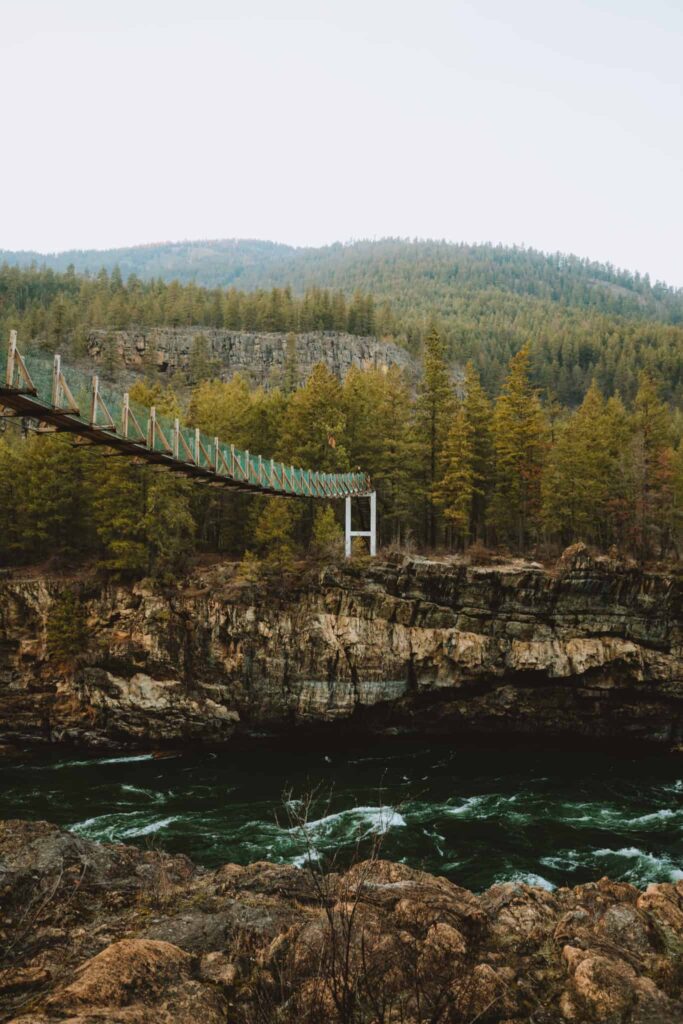
Kootenai Falls: Montana’s largest undammed waterfall, with a dramatic swinging bridge spanning the river. Free to visit, and roughly 15 minutes from Troy.
Ross Creek Cedars: A preserved grove of western red cedars, some over 1,000 years old. A short, easy boardwalk trail makes this accessible to everyone.
Cabinet Mountains Wilderness: Over 94,000 acres of roadless wilderness with alpine lakes, rugged peaks, and backcountry solitude. Scotchman Peak and Engle Lake are standout hikes.
Lake Koocanusa: A 90-mile reservoir with exceptional fishing for kokanee salmon and rainbow trout.
Flathead River: Whitewater rafting, kayaking, and some of Montana’s best fly fishing, accessible from multiple put-in points along Highway 2.
Travelers who base at a Zone 3 property like Bull Lake can easily combine a Glacier day trip with days spent exploring these less-visited destinations — often with the trails and waterways entirely to themselves.
Getting to Northwest Montana
By air: Glacier Park International Airport (FCA) in Kalispell is the closest commercial airport, served by Delta, United, Alaska, Allegiant, and others. From FCA, it’s about 30 minutes to West Glacier and approximately 2 hours 15 minutes to Bull Lake.
Spokane International Airport (GEG) is another option — roughly 3 hours 15 minutes to Bull Lake and about 4.5 hours to West Glacier. Spokane often has cheaper flights and more options.
Missoula International Airport (MSO) is roughly 3.5 hours from Bull Lake and about 4 hours from West Glacier via Highway 93 and Highway 2.
By car: Highway 2 is the primary east-west corridor through Northwest Montana, following the southern boundary of Glacier National Park. It’s a beautiful drive in every season, but plan for winding mountain roads, limited cell service in some stretches, and wildlife crossings (especially at dawn and dusk).
Important: Download offline maps before heading to any Zone 3 destination. Cell service can be spotty between Libby and Troy.
Frequently Asked Questions
How far in advance should I book a cabin near Glacier National Park?
For peak summer season (July–August), book Zone 1 and Zone 2 properties 6–12 months ahead. Zone 3 properties like those on Bull Lake typically have availability with 1–3 months notice, even during summer.
Can I do a day trip to Glacier from Bull Lake or Troy, Montana?
Yes. Bull Lake is approximately 2 to 2.5 hours from Glacier’s West Entrance. Many travelers make it a full day — leaving early, spending the day on Going-to-the-Sun Road or hiking, and returning in the evening. It works best on extended trips where you’re splitting your time between the park and local attractions.
What’s the cheapest way to stay near Glacier National Park?
Zone 3 cabins in the Bull Lake, Troy, and Libby areas offer the lowest nightly rates in the Northwest Montana region, especially for larger groups where per-person costs drop significantly. Shoulder season (May–June, October) also reduces pricing across all zones by 20–40%.
Are Glacier-area cabins open year-round?
Many Zone 1 properties close from October through May. Most Zone 2 and Zone 3 properties operate year-round. Properties like Shangrilog on Bull Lake are fully winterized and accessible in all seasons.
Do I need a vehicle reservation to enter Glacier National Park?
Glacier requires advance vehicle reservations for the Going-to-the-Sun Road corridor during peak season (typically late May through early September). Reservations open in batches on Recreation.gov. Check the National Park Service website for current requirements before your trip.
What should I know about driving in Northwest Montana?
Expect winding mountain roads, wildlife crossings (especially at dawn and dusk), and limited cell service in rural areas. Fuel up in larger towns before heading to remote destinations. Winter driving requires snow tires or chains on many routes.
Is Bull Lake a good alternative to staying near Glacier?
For travelers planning 4+ night trips who want to explore all of Northwest Montana — not just Glacier — Bull Lake offers exceptional value. You get larger properties, lakefront access, and genuine wilderness at a fraction of Glacier-adjacent pricing. The trade-off is drive time to the park, which makes it less ideal for quick, park-only trips.
What are the best hikes in Glacier National Park?
Popular options include Highline Trail (11.8 miles, stunning ridgeline views), Avalanche Lake (5.9 miles, accessible and family-friendly), Iceberg Lake (9.7 miles, dramatic alpine scenery in Many Glacier), and Hidden Lake Overlook (2.7 miles from Logan Pass). Check trail conditions at the visitor center before heading out — conditions change rapidly in the park.
Can I bring my dog to a cabin near Glacier?
Policies vary by property. Many Zone 3 cabins, including some on Bull Lake, are dog-friendly. Note that Glacier National Park has strict pet restrictions — dogs are not allowed on trails or in the backcountry. Check individual cabin policies before booking.
Plan Your Northwest Montana Cabin Trip
Whether you want a cabin steps from Glacier’s entrance or a lakefront retreat where the mountains and water are your only neighbors, Northwest Montana has the right fit.
For travelers looking for the full Montana experience — Glacier day trips combined with lakefront living, mountain fishing, ancient forests, and genuine wilderness solitude — Shangrilog on Bull Lake delivers something the park-adjacent properties simply can’t.
3,000 square feet. 85 feet of private shoreline. Four bedrooms. Room for 10. Your own dock on one of Montana’s most pristine lakes.
Check availability and book your stay → | Learn more about Bull Lake and the surrounding area →