Bull Lake Cabin in Troy, Montana

Finding the right lodging can make or break a Glacier National Park trip. Stay in the wrong place and you’ll spend half your vacation in the car. Book too late and you’ll settle for whatever’s left at twice what you wanted to pay.
The challenge is that Glacier Park area lodging isn’t one thing. It’s a sprawling ecosystem of historic lodges inside the park, gateway town hotels, vacation cabin rentals, campgrounds, and wilderness properties scattered across Northwest Montana. Each serves a different type of traveler, and no single option is best for everyone.
This guide walks through every category of lodging available in the Glacier region — what each costs, what the experience is like, and which type fits your trip. Whether you’re planning a weekend getaway or a week-long Montana adventure, you’ll know exactly where to look.
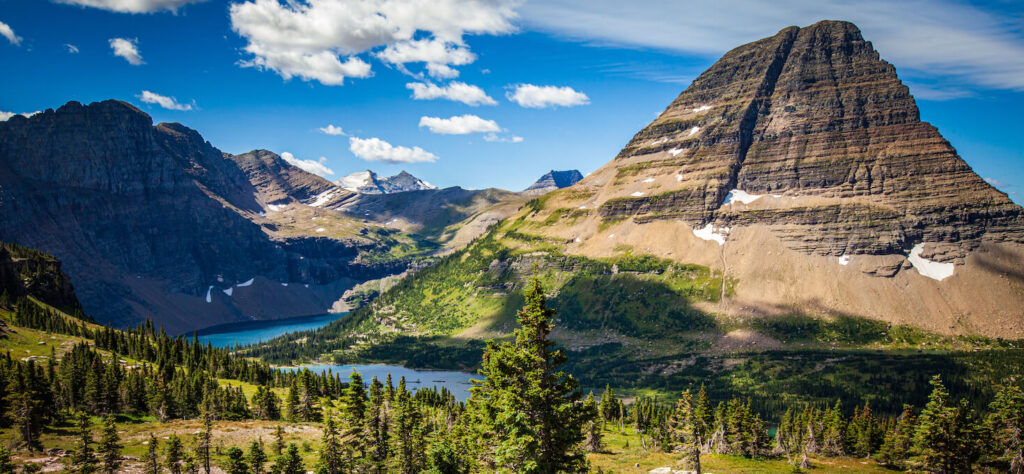
The Glacier Lodging Landscape at a Glance
Before diving into specifics, here’s the big picture. Glacier area lodging breaks into five main categories:
In-Park Lodges and Inns: Historic properties operated by concessionaires inside Glacier National Park. Iconic but limited, seasonal, and they book out fast.
Gateway Town Hotels and Motels: Chain and independent hotels in Whitefish, Columbia Falls, Kalispell, and other towns within 45 minutes of the park.
Vacation Rentals and Cabins: Private homes, cabins, and condos available on platforms like Vrbo and Airbnb, ranging from park-adjacent to deep in the Northwest Montana backcountry.
Campgrounds: Both inside the park and in surrounding national forests. The most affordable option and the most immersive — but requires gear and planning.
Off-the-Radar Retreats: Lakefront cabins, ranch stays, and wilderness properties farther from the park that trade proximity for space, privacy, and value.
Each has its place. Let’s break them down.
In-Park Lodges: The Iconic Experience
Glacier National Park has five in-park lodging properties, all operated by concessionaires (Xanterra Travel Collection and Glacier Park Collection by Pursuit). These are the lodges you see in the postcards — massive timber frames, stone fireplaces, and views that haven’t changed since the early 1900s.
The Properties
Many Glacier Hotel: Built in 1915 by the Great Northern Railway on the shore of Swiftcurrent Lake. Widely considered the most scenic location in the park. Access to Iceberg Lake, Grinnell Glacier, and Ptarmigan Tunnel trailheads. The crown jewel of Glacier lodging.
Lake McDonald Lodge: On the west side of the park along the shore of Lake McDonald. Rustic Swiss-chalet style with cozy lodge rooms and lakeside cottages. Close to Trail of the Cedars and Avalanche Lake.
Glacier Park Lodge: Located in East Glacier on the park’s southeast corner. The original “showpiece” lodge, known for its massive Douglas Fir lobby columns. Includes a historic 9-hole golf course.
Rising Sun Motor Inn: Mid-century motor inn and cottages on the north shore of St. Mary Lake. Simpler accommodations at a lower price point. Convenient for Going-to-the-Sun Road access.
Swiftcurrent Motor Inn & Cabins: Budget-friendly option in the Many Glacier valley. Basic motel rooms and rustic cabins. The best value for in-park lodging if you’re focused on hiking.
What to Expect
In-park lodges are experiences, not luxury hotels. The historic properties don’t have elevators, air conditioning, or televisions. Rooms are small by modern standards. Walls are thin. Plumbing can be temperamental. Floors creak.
That’s part of the charm — these lodges connect you to the park’s history in a way nothing else can. But go in with the right expectations. This isn’t a Marriott. It’s a 110-year-old wooden lodge on the side of a mountain, and it’s magnificent precisely because of what it isn’t.
Pricing and Availability
In-park lodging is the hardest to book in the entire Glacier ecosystem. Properties open reservations roughly 12–13 months in advance, and the most popular room types (lakeside at Lake McDonald, anything at Many Glacier) sell out within hours of release.
Peak season rates range from approximately $150–$200 per night for basic motor inn rooms to $250–$450+ for lodge rooms with views. These rates reflect the in-park location premium — comparable rooms outside the park cost significantly less.
The reality: If you didn’t book 12 months ahead, in-park lodging is likely not available for your dates. Check for cancellations, but have a backup plan.
Season
All in-park lodges operate seasonally, typically late May through late September (exact dates vary by property and year). They are completely closed in winter.
Gateway Town Hotels and Motels
The towns surrounding Glacier offer the widest selection of traditional hotel lodging. This is where most visitors end up staying — not by first choice, necessarily, but because in-park lodging was already booked.
Key Gateway Towns
West Glacier (0–5 minutes from west entrance): The most convenient location outside the park. Limited options — a handful of lodges, cabins, and one RV resort. Pricing is high due to proximity. Properties include Belton Chalet (historic, upscale), Glacier Guides Lodge (eco-friendly B&B style), and Paddle Ridge (cabins and lodge rooms). Most are seasonal.
For a deeper look at West Glacier specifically, see our West Glacier MT Vacation Rentals guide.
Columbia Falls (15–20 minutes from west entrance): The best balance of proximity and practicality. Cedar Creek Lodge, Meadow Lake Resort, and several newer hotel properties offer reliable accommodations at moderate pricing. Columbia Falls has grocery stores, restaurants, and outfitters — the services West Glacier lacks.
Whitefish (30–35 minutes from west entrance): Northwest Montana’s resort town. The Lodge at Whitefish Lake, Good Medicine Lodge, and Grouse Mountain Lodge lead a deep bench of quality hotels. Whitefish also has the best dining and nightlife scene in the region. Pricing ranges from $150–$400+/night depending on property and season.
Kalispell (30–35 minutes from west entrance): The Flathead Valley’s commercial center and home to Glacier Park International Airport. Chain hotels (Hampton Inn, Holiday Inn Express, Hilton Garden Inn) offer consistent quality and the lowest gateway-town rates, typically $120–$250/night in summer. Less scenic than Whitefish, but the most practical option for families who want reliable services.
East Glacier and St. Mary (east side of park): Smaller communities with fewer options. Summit Mountain Lodge and a handful of small inns serve the east-side visitor. St. Mary Village (operated by Pursuit) offers lodge rooms, cabins, and cottages at the eastern end of Going-to-the-Sun Road. Rates are similar to west-side gateway towns. Best for travelers focused on Many Glacier, Two Medicine, or driving Going-to-the-Sun Road from east to west.
Gateway Hotel Pros and Cons
Advantages: Reliable availability (more inventory than in-park), year-round operation for most properties, consistent amenities (Wi-Fi, AC, daily housekeeping), and proximity to restaurants and services.
Disadvantages: The generic hotel experience doesn’t match Montana’s wild character. You’re sharing walls with other guests. No kitchen access in most cases (which means eating out for every meal). And the best gateway town properties still command $200–$400/night in peak season.
Vacation Rentals and Cabins
This is the fastest-growing segment of Glacier area lodging — and for good reason. Vacation rentals offer what hotels and lodges can’t: space, kitchens, privacy, and the flexibility to stay on your own schedule.
What’s Available
The Glacier rental market spans a wide range:
Park-adjacent cabins (West Glacier, Coram): Small to mid-size properties sleeping 2–6 guests. High demand, premium pricing ($250–$600+/night in peak season). Best for short trips focused on the park. Limited availability — book 6–12 months ahead.
Gateway area homes (Columbia Falls, Whitefish, Kalispell): More inventory, more variety, and better pricing. Homes sleeping 4–10 guests are common. Full kitchens, garages for gear, yards for kids. The sweet spot for families who want park access with room to breathe. Peak rates typically $175–$400/night.
Lakefront and wilderness properties (Flathead Lake, Bull Lake, Lake Koocanusa): Larger properties in scenic settings farther from the park. These trade proximity for genuine Montana immersion — private docks, mountain views, and the kind of space and quiet that the Glacier corridor doesn’t offer. More on these below.
Vacation Rental Pros and Cons
Advantages: Significantly more space per dollar than hotels or lodges. Full kitchens save hundreds on dining over a multi-night stay. Privacy and outdoor space (decks, fire pits, yards). Better for groups — one large rental is almost always cheaper than multiple hotel rooms. Many allow pets.
Disadvantages: Quality varies — read recent reviews carefully. Cleaning fees and platform service charges add 15–25% to the advertised nightly rate. No daily housekeeping. Check-in/check-out times can be rigid. And the best properties still book out months in advance during peak season.
Campgrounds: The Most Immersive Option
For travelers willing to bring gear, camping puts you closer to Glacier’s wilderness than any lodge or rental.
In-Park Campgrounds
Glacier National Park operates 13 campgrounds with over 1,000 sites. Most operate on a first-come, first-served basis, though several accept reservations through Recreation.gov.
Key campgrounds: Apgar (west side, largest, close to Lake McDonald), Fish Creek (reservable, popular), Many Glacier (reservable, access to the park’s best hiking), St. Mary (reservable, east-side basecamp), and Bowman Lake (primitive, reached by dirt road, spectacular solitude).
Pricing: $10–$23/night depending on the campground and site type. Group sites are $53+.
The catch: Popular campgrounds fill by mid-morning during peak season. If you’re going first-come, first-served, arrive before 8 AM. Reservable campgrounds release dates in advance on Recreation.gov and sell out quickly.
Forest Service and Private Campgrounds
The Flathead National Forest and Kootenai National Forest surrounding Glacier offer dispersed camping and developed campgrounds at lower cost and with easier availability. Private campgrounds and KOA parks near West Glacier, Columbia Falls, and Whitefish provide hookups and amenities for RV travelers.
Off-the-Radar Retreats: The Alternative Approach
Here’s what most Glacier lodging guides leave out.
The park draws over 3 million visitors a year, and the lodging infrastructure within 45 minutes of the entrances strains to keep up. Prices climb. Availability shrinks. Properties get smaller to maximize revenue per square foot. The experience starts feeling more like a transaction than a Montana vacation.
But Northwest Montana extends far beyond the Glacier corridor. And for a growing number of travelers — especially those on extended trips, traveling with groups, or returning to the region after their first park visit — the lodging outside the traditional Glacier orbit offers something the gateway towns can’t.
Bull Lake: Lakefront Living in the Cabinet Mountains
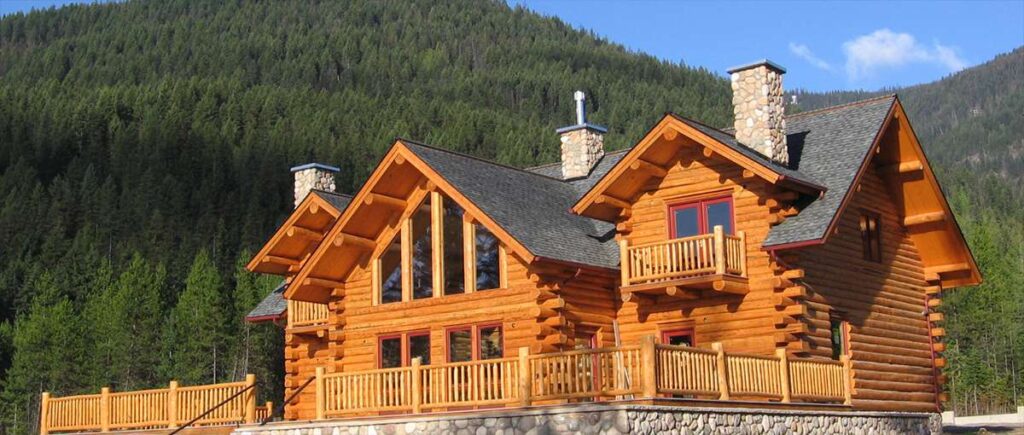
Bull Lake sits approximately two to two and a half hours west of Glacier’s West Entrance, deep in the Cabinet Mountains of Lincoln County. It’s one of Northwest Montana’s most pristine lakes — less developed, less crowded, and dramatically more affordable than anything in the Flathead Valley.
Cabin properties on Bull Lake offer what the Glacier corridor fundamentally lacks: private lakefront access, genuine wilderness seclusion, and space measured in thousands of square feet rather than hundreds.
Shangrilog, a handcrafted 3,000-square-foot log home on 85 feet of private Bull Lake shoreline, is the standout example. Four bedrooms, three and a half bathrooms, a private dock, mountain views from every window, and room for up to 10 guests — at a nightly rate that would barely cover a basic lodge room inside the park.
The family behind Shangrilog has a direct connection to Glacier: their great-grandfather helped build Going-to-the-Sun Road. That personal history ties the property to the park in a way no hotel concession can replicate.
Bull Lake works best for: Extended trips (4+ nights) where Glacier is one part of a larger Northwest Montana itinerary. Large groups and families who need space. Travelers who prioritize lakefront living, privacy, and value. Anyone who’s visited Glacier before and wants to discover the rest of the region.
The trade-off: Drive time to the park. A Glacier day trip from Bull Lake requires planning. This is a basecamp for exploring all of Northwest Montana, not a doorstep to one specific entrance.
Check Shangrilog availability →
Flathead Lake’s West Shore
Flathead Lake, the largest natural freshwater lake west of the Mississippi, sits south of Kalispell. The west shore offers vacation rentals and lodges with lake access and mountain views, roughly 45–60 minutes from Glacier’s west entrance. A solid option for travelers who want a lake-based trip with Glacier access.
Guest Ranches
Several guest ranches in the Flathead Valley and along the Rocky Mountain Front offer all-inclusive stays with horseback riding, guided fishing, and ranch activities. Properties like Bar W Guest Ranch near Whitefish combine Montana ranch culture with Glacier proximity. Pricing is typically all-inclusive at $250–$500+ per person per night.
Choosing Your Lodging Type: A Comparison
| Factor | In-Park Lodges | Gateway Hotels | Vacation Rentals | Campgrounds | Off-Radar Retreats |
|---|---|---|---|---|---|
| Peak nightly rate | $150–$450 | $120–$400 | $175–$600+ | $10–$23 | $150–$350 |
| Space | Small rooms | Standard rooms | 800–3,000+ sq ft | Tent/RV site | 1,500–3,000+ sq ft |
| Kitchen | No | Rarely | Yes | Camp stove | Yes |
| Privacy | Low | Low | High | Moderate | Very high |
| Booking lead time | 12+ months | 1–3 months | 3–12 months | Day-of to 6 months | 1–3 months |
| Year-round | No (seasonal) | Mostly yes | Varies | Mostly seasonal | Often yes |
| Best for | History buffs, couples | Convenience seekers | Families, groups | Budget travelers, adventurers | Extended trips, large groups |
Lodging Strategy by Trip Length
Not sure where to start? Here’s how trip length should shape your lodging decision:
Weekend Trip (2–3 nights): Prioritize proximity. Gateway town hotels or park-adjacent vacation rentals let you maximize time in the park. In-park lodges if you can get them.
Mid-Length Trip (4–5 nights): Consider splitting your stay — 2–3 nights on the west side and 1–2 nights on the east side to cover both halves of Going-to-the-Sun Road without excessive driving. A mix of hotel and vacation rental works well.
Extended Trip (6+ nights): This is where off-radar retreats shine. Base at a spacious property like those on Bull Lake or Flathead Lake, dedicate 1–2 full days to Glacier, and spend the rest exploring the Cabinet Mountains, Kootenai Falls, Ross Creek Cedars, and the broader region. You’ll see more of Montana, spend less per night, and avoid the burnout of fighting Glacier crowds every day.
Multi-Generational or Group Trip (6+ people): Skip the hotels entirely. A large vacation rental — whether near the park or on Bull Lake — keeps everyone together, provides cooking facilities, and costs dramatically less per person than multiple hotel rooms.
Booking Tips That Actually Help
For in-park lodges: Mark your calendar for when reservations open (check concessionaires’ websites for exact dates). Be online the moment booking opens. Have backup dates ready. Check for cancellations weekly starting 30 days before your trip.
For gateway hotels: Booking 2–3 months ahead is usually sufficient for summer dates. Use direct booking when possible — hotel websites sometimes offer rates lower than third-party platforms, and cancellation policies are usually more flexible.
For vacation rentals: Search across multiple platforms (Vrbo, Airbnb, direct booking sites). Factor in cleaning fees and service charges before comparing. Read reviews from the current or previous season. Verify the actual address — many “West Glacier” listings are in Coram or Columbia Falls.
For campgrounds: Reservable campgrounds at Glacier release on Recreation.gov — set reminders and book immediately when dates open. For first-come sites, arrive before 8 AM during peak season. Have a backup campground plan.
For everyone: Consider shoulder season (late May to mid-June, September to mid-October). Pricing drops 20–40%, crowds thin dramatically, and the park is arguably more beautiful with fall colors or spring snowmelt.
Frequently Asked Questions
What types of lodging are available inside Glacier National Park? Glacier has five in-park properties: Many Glacier Hotel, Lake McDonald Lodge, Glacier Park Lodge (East Glacier), Rising Sun Motor Inn, and Swiftcurrent Motor Inn & Cabins. These range from historic grand lodges to basic motor inns and rustic cabins. All are seasonal (roughly late May through late September) and operated by concessionaires.
How far in advance should I book Glacier Park area lodging? In-park lodges require 12+ months advance booking. Park-adjacent vacation rentals need 6–12 months. Gateway town hotels are more flexible at 1–3 months. Off-radar properties like Bull Lake cabins often have availability with 1–3 months notice, even during summer.
What is the cheapest lodging near Glacier National Park? Campgrounds inside the park ($10–$23/night) are the most affordable option. For roofed accommodations, budget motels in Kalispell and Columbia Falls start around $100–$150/night. Larger vacation rentals farther from the park — especially on Bull Lake — offer the best per-person value for groups of 4+.
Is lodging available near Glacier year-round? In-park lodges close October through May. Most West Glacier properties are seasonal. Gateway town hotels in Whitefish, Columbia Falls, and Kalispell operate year-round. Vacation rentals on Bull Lake, including Shangrilog, are fully winterized and available in all seasons.
Should I stay on the west side or east side of Glacier? The west side (West Glacier, Columbia Falls, Whitefish) offers the most lodging options and access to Lake McDonald, Avalanche Lake, and the western half of Going-to-the-Sun Road. The east side (East Glacier, St. Mary) is closer to Many Glacier, Two Medicine, and the more dramatic eastern peaks. If your trip is 4+ nights, consider splitting your stay between both sides.
Do I need a vehicle reservation to enter Glacier National Park? Yes, during peak season (typically late May through early September), a vehicle reservation is required for the Going-to-the-Sun Road corridor. Reservations are available through Recreation.gov. Check the NPS website for current dates and requirements.
What’s the best lodging for a large family or group visiting Glacier? Vacation rentals are the clear winner for groups. A single property sleeping 6–10 guests costs less than multiple hotel rooms, keeps everyone together, and provides cooking facilities. For the most space and value, properties on Bull Lake offer 3,000+ square feet with private lakefront access.
Can I visit Glacier National Park as a day trip from farther away? Yes. Many travelers visit Glacier as a day trip from Flathead Lake (45–60 min), Libby (1.5–2 hours), or Bull Lake (2–2.5 hours). This approach works especially well on extended trips where you’re exploring the broader Northwest Montana region and dedicating specific days to the park.
Start Planning Your Glacier Lodging
The right Glacier Park area lodging depends on your priorities — proximity, price, space, or experience. For most travelers, the answer isn’t a single property type but a strategy that matches their trip length, group size, and what they actually want out of a Montana vacation.
For the complete breakdown of cabin options by zone around Glacier, read our guide: Cabins near Glacier National Park →
For an in-depth look at the most popular gateway area, see: West Glacier MT Vacation Rentals →
And if you’re ready for the kind of Montana lodging that gives you lakefront access, mountain views, and space to actually relax — Shangrilog on Bull Lake is waiting.