Bull Lake Cabin in Troy, Montana

The Kootenai National Forest is one of the largest and least-visited national forests in the lower 48 states. At 2.2 million acres, it sprawls across the northwestern corner of Montana and into northern Idaho — a landscape of old-growth cedar groves, wild rivers, alpine wilderness, and mountain lakes that most Americans have never heard of and even fewer have visited.
That’s not an accident. The Kootenai doesn’t have a marketing budget. It doesn’t have a famous road or a postcard image that millions of people recognize. It doesn’t have a gatekeeping entrance fee or a vehicle reservation system turning visitors away. What it has is something increasingly rare in the American West: genuine, unhurried wilderness that you can actually get to.
Cabin rentals in and around the Kootenai National Forest represent some of the best-value lodging in Northwest Montana — whether you’re talking about a rustic Forest Service cabin deep in the backcountry, a riverfront property along the Kootenai drainage, or a lakefront retreat on one of the forest’s pristine mountain lakes.
This guide covers every lodging option available for travelers visiting the Kootenai National Forest region — from the specific communities and cabin types to the experiences that make this corner of Montana worth the detour. If you’ve been searching for the Northwest Montana that hasn’t been overrun yet, you’re in the right place.
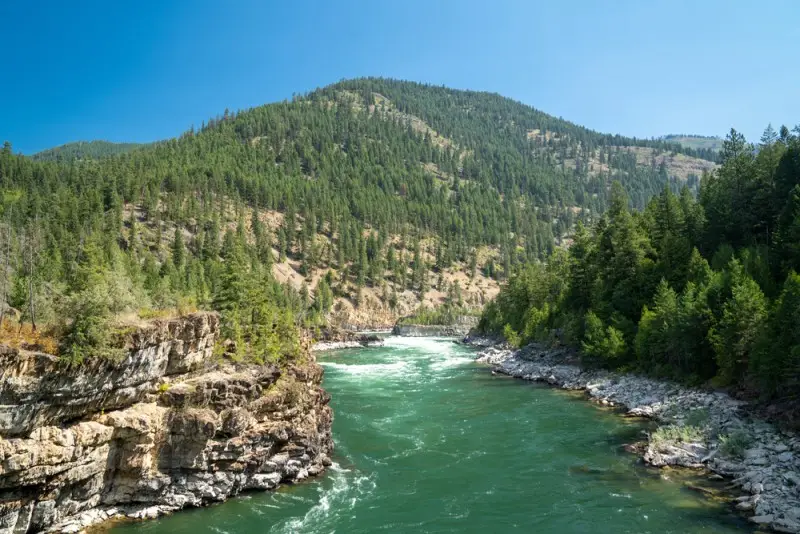
Understanding the Kootenai National Forest
Geography and Scale
The Kootenai National Forest covers northwest Montana’s Lincoln and Sanders counties, with a narrow strip extending into Mineral County. It borders Canada to the north, Idaho to the west, and the Flathead National Forest to the east.
The forest is divided into six ranger districts, each with its own character:
Libby Ranger District — The largest district, centered around Libby and Lake Koocanusa. Heavily forested, with significant river and reservoir access. The most-serviced district for visitors.
Troy Ranger District — Covers the area around Troy and Bull Lake. Old-growth cedar groves, the Bull River drainage, and access to the Cabinet Mountains Wilderness. The most ecologically diverse district.
Three Rivers Ranger District — The Yaak River Valley, the Fisher River drainage, and some of the most remote terrain in the forest. Wolf, wolverine, and grizzly country.
Cabinet Ranger District — Access to the Cabinet Mountains Wilderness from the south. The Noxon and Clark Fork River areas. Quieter and less-visited than the northern districts.
Rexford Ranger District — Northern Lincoln County, Lake Koocanusa, and the Tobacco Valley near Eureka. International border country.
Canoe Gulch Ranger District — The Thompson Falls area in Sanders County. Flathead River access and lower-elevation terrain.
Understanding which district your cabin sits in — and what that district offers — matters for trip planning. A cabin in the Yaak is a very different experience from a cabin on Lake Koocanusa, even though both are technically “in the Kootenai National Forest.”
What Makes the Kootenai Different
Most national forests near major travel corridors have been discovered, developed, and to varying degrees, crowded. The Kootenai sits far enough from major population centers — and far enough from Glacier National Park’s tourist stream — that it has largely escaped that fate.
The result is a forest that still operates on Montana’s original terms. Trailheads without parking lots. Fishing holes without crowds. Forest Service roads where you might not see another vehicle for hours. Campgrounds that don’t require reservations six months in advance.
For cabin rental travelers specifically, this translates to:
- More inventory relative to demand
- Lower nightly rates than comparable properties near Glacier
- Longer booking windows — even in peak season
- A fundamentally different pace of experience
The Kootenai is not a consolation prize for travelers who couldn’t get a Glacier cabin. It’s a destination for travelers who understand what Northwest Montana actually is — and want more of it.
The Communities: Where to Base Your Kootenai National Forest Stay
The Kootenai National Forest is surrounded by a handful of small communities that serve as natural basecamps. Each has a distinct character, different proximity to the forest’s major attractions, and a different rental market.
Troy
Troy sits at the confluence of the Bull and Kootenai Rivers in the southwest corner of Lincoln County — small (population around 900), authentic, and strategically positioned between the forest’s best attractions.
From Troy, nearly everything in the Kootenai is within reach: Kootenai Falls is 15 minutes east, Ross Creek Cedars is 30 minutes south, Bull Lake is 20 minutes north, and the Cabinet Mountains Wilderness trailheads are within 30–45 minutes. For travelers wanting to cover the full range of Kootenai experiences, Troy’s central location is hard to beat.
The Troy rental market offers genuine variety — riverfront properties along the Kootenai, lakefront cabins on Bull Lake, mountain retreats in the surrounding national forest, and basic in-town options for travelers who need proximity to services over scenic immersion.
For a complete breakdown of lodging options in and around Troy, see our Troy MT Vacation Rentals guide →
Key Troy stats:
- Population: ~900
- Nearest full grocery: Troy (basic) / Libby (30 min, full grocery)
- Hospital: Cabinet Peaks Medical Center in Libby (30 min)
- Ranger station: Troy Ranger District
Libby
Libby is Lincoln County’s largest community and the primary service hub for the region. It sits along the Kootenai River about 30 miles east of Troy, surrounded by national forest on virtually every side.
For travelers, Libby offers the most complete service infrastructure in the region — a full grocery store, hardware, medical access (Cabinet Peaks Medical Center), dining, and the most traditional hotel inventory in Lincoln County. The Libby Ranger District office provides current trail and road condition information.
The cabin rental market around Libby ranges from in-town vacation homes to riverfront properties on the Kootenai and rural retreats in the surrounding mountains. Lake Koocanusa, one of the region’s premier fishing destinations, is accessible from Libby in roughly 25–30 minutes.
For a complete breakdown of lodging in the Libby area, see our Libby Montana Cabin Rentals guide →
Key Libby stats:
- Population: ~2,800
- Services: Full grocery, medical, hardware, restaurants, gas
- Airport: Nearest commercial service at Glacier Park International (FCA), approximately 1 hour 45 minutes
Bull Lake
Bull Lake is not a town — it’s a pristine mountain lake in the Troy Ranger District, nestled between the Cabinet Mountains to the east and the Purcell Mountains to the west. It’s one of the Kootenai National Forest’s crown jewels, and one of the least-known mountain lakes in the Pacific Northwest.
The lake stretches approximately six miles in length, with cold, clear water, mountain reflections, and a surrounding landscape that remains largely undeveloped. Private cabin properties line a portion of the shoreline; the balance is national forest.
Bull Lake’s cabin rental market is the most distinctive in the Kootenai region — true lakefront properties with private dock access, mountain views, and the kind of privacy that almost no other lodging option in Northwest Montana can match at comparable price points.
Shangrilog is the standout property on Bull Lake: a 3,000-square-foot handcrafted log home built by an Amish craftsman, sitting on 85 feet of private shoreline with a private dock, four bedrooms, three and a half bathrooms, and room for up to 10 guests. The family behind it has a generational connection to the broader Northwest Montana region that goes back to the construction of Going-to-the-Sun Road.
Eureka and the Tobacco Valley
Eureka sits in the northern Tobacco Valley near Lake Koocanusa and the Canadian border — the quietest and most remote of the Kootenai’s gateway communities. The Rexford Ranger District serves the area, with access to some of the forest’s most dramatic reservoir scenery and the least-crowded fishing in the region.
The cabin rental market around Eureka is limited but growing — primarily vacation homes and lake-access properties on or near Koocanusa. The area works best as a basecamp for travelers combining a Kootenai trip with a visit to Waterton Lakes National Park (approximately 1.5 hours northeast) or travelers who want the most remote possible experience in the region.
The Yaak Valley
The Yaak River Valley — accessible from Troy via Highway 508 north — is the most remote inhabited drainage in the Kootenai National Forest. Dense conifer forest, a small wild river, almost no development, and one of the most intact predator communities remaining in the lower 48.
Cabin rentals in the Yaak are rare and genuinely remote. There is minimal cell service, no reliable commercial infrastructure, and access roads that require preparation. For travelers who want complete solitude and are comfortable with true backcountry conditions, the Yaak offers something available almost nowhere else.
Types of Kootenai National Forest Cabin Rentals
Forest Service Cabins and Fire Lookouts
The Kootenai National Forest operates a collection of historic Forest Service cabins and fire lookouts available for nightly rental through Recreation.gov. These are among the most distinctive overnight experiences available in the entire Northwest Montana region.
What they are: Former guard stations, ranger cabins, and fire lookout towers, most dating from the 1920s through 1940s. They sit in remote locations within the forest — along trails, on ridgelines, at trailheads — accessible by foot, vehicle, or snowmobile depending on the property and season.
What to expect: Rustic conditions. Wood stoves or propane heating. Basic plumbing or outhouses. No electricity in most. Bring your own sleeping bags, food, cooking supplies, and water filtration. These are working historic structures, not vacation rentals with hot tubs.
What makes them extraordinary: You are sleeping in the same cabin a 1930s ranger slept in, in a location chosen specifically for its position within the wilderness. Fire lookouts offer 360-degree views from elevated ridgelines that are inaccessible any other way. The experience is genuinely irreplaceable.
Pricing: $50–$100 per night — the most affordable roofed lodging in the region.
Booking: Through Recreation.gov. Search “Kootenai National Forest” to see current available properties. Summer dates fill quickly; off-season availability is much better.
Best for: Adventurous couples and small groups comfortable with rustic conditions. Hunters, backcountry skiers, and photographers. Travelers who want a night inside the forest rather than adjacent to it.
Private Lakefront Cabin Rentals (Bull Lake and Lake Koocanusa)
Private cabin rentals on the Kootenai’s mountain lakes occupy the opposite end of the comfort spectrum from Forest Service properties — fully equipped, lakefront, and designed for extended stays with groups.
Bull Lake properties offer the most established private rental market in the region. Properties with direct lake access, private docks, and mountain views in every direction. The signature property is Shangrilog — 3,000 square feet of handcrafted log construction on 85 feet of private shoreline, sleeping up to 10 guests with four bedrooms and a private dock.
Lake Koocanusa properties are fewer in number but offer dramatic reservoir scenery — steep forested slopes dropping to blue-green water — with excellent fishing access. Koocanusa rentals tend to be more rustic than Bull Lake properties and are best suited to fishing-focused trips.
Peak season rates: $150–$350 per night for Bull Lake properties; $125–$275 for Koocanusa-area rentals.
Best for: Extended trips of 4+ nights. Large groups and families who need space. Travelers prioritizing lakefront access, fishing, and genuine wilderness immersion.
Riverfront and Valley Cabin Rentals (Kootenai River Corridor)
The Kootenai River flows through the heart of Lincoln County — past Troy, through Libby, past the dramatic Kootenai Falls gorge — and the properties along its corridor represent some of the most scenic and underappreciated cabin rental opportunities in the forest.
Riverfront cabins along the Kootenai offer direct access to one of Montana’s premier trout fisheries, the scenic Highway 2 corridor, and easy access to the forest’s major attractions. Properties range from basic riverside retreats to comfortable vacation homes with mountain views and river frontage.
The Kootenai River between Libby Dam and the Idaho border is classified as a Gold Medal fishery for wild rainbow trout — one of the most productive and consistently high-quality fisheries in the northern Rockies.
For travelers specifically looking for lodging along the Kootenai River corridor, see our Kootenai River Lodge Stays guide →
Peak season rates: $125–$300 per night for most riverfront properties in the corridor.
Best for: Anglers targeting wild rainbow and bull trout. Travelers who want the scenic Highway 2 experience as part of their stay. Couples and small families who want river access without the lakefront premium.
In-Town Vacation Rentals (Libby, Troy)
Libby and Troy both have small vacation rental markets of in-town and near-town properties — homes, cabins, and cottages available on Vrbo and Airbnb at lower price points than lakefront or riverfront alternatives.
These properties make the most sense for travelers who need reliable service access, are on a tighter budget, or are using the community as a hub for day trips into the forest rather than seeking immersion in a remote setting.
Peak season rates: $100–$225 per night for most in-town and near-town rentals.
Best for: Budget-conscious travelers. Hunters and anglers who spend their days in the field and need a functional place to sleep. Travelers focused on accessing multiple parts of the forest from a central base.
Key Experiences Accessible from Kootenai National Forest Cabins
Kootenai Falls and the Swinging Bridge
Montana’s largest undammed waterfall sits approximately 15 minutes east of Troy on Highway 2. The Kootenai River drops through a dramatic basalt gorge — 90+ feet of free-falling water — with a swinging footbridge spanning the canyon downstream.
The trail to the falls is 1.2 miles roundtrip through old-growth ponderosa pine, accessible to most fitness levels and free to visit. The falls are significant to the Kootenai Tribe, who have called this valley home for thousands of years — interpretive signage along the trail tells that history.
This is one of the most visually impressive and most undervisited natural sites in Montana. It should be on every Kootenai National Forest itinerary regardless of what else you’re doing.
Access from Bull Lake: Approximately 20 minutes. Access from Libby: Approximately 20 minutes west on Highway 2.
For lodging closest to Kootenai Falls, see the Kootenai River Lodge Stays guide →
Ross Creek Cedars Scenic Area
Thirty miles northwest of Libby on Highway 56, the Ross Creek Cedars preserve a grove of western red cedars that have stood for 500–1,000 years. The largest specimens reach 175 feet in height and 12 feet in diameter — dimensions that stop visitors mid-stride the first time they walk among them.
A one-mile boardwalk loop winds through the grove at ground level, protecting the root systems while providing intimate access to the canopy. The trail is accessible to all ability levels, free to visit, and open late May through October.
Walking through the Ross Creek Cedars resets your sense of scale in a way that few outdoor experiences can. These trees were mature before the Pilgrims landed. Several were already old growth when Lewis and Clark passed through the region.
Access from Troy: Approximately 30 minutes via Highway 56. Access from Bull Lake: Approximately 30–40 minutes. Season: Late May through October (access road may be snowed in off-season).
For lodging in the area immediately surrounding Ross Creek Cedars, see our Ross Creek Cedars Area Lodging guide →
The Cabinet Mountains Wilderness
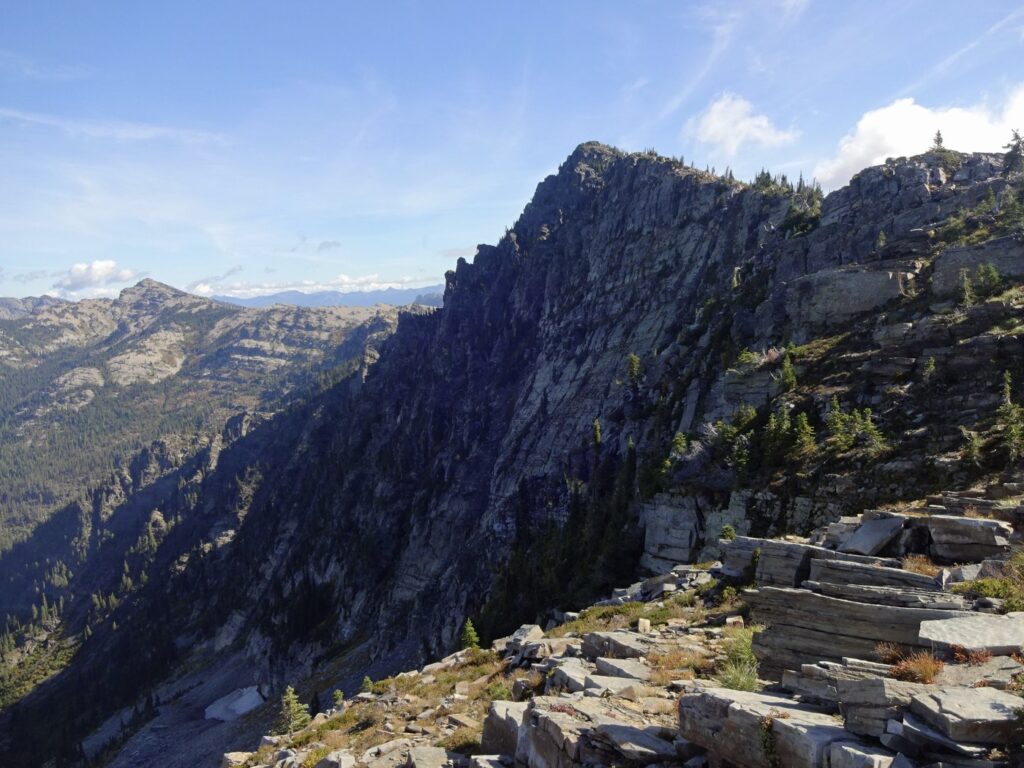
The Cabinet Mountains Wilderness encompasses 94,272 acres of roadless backcountry within the Kootenai National Forest — one of the most rugged and least-visited wilderness areas in the northern Rockies. Over 30 alpine lakes. Peaks topping 8,000 feet. Glacier-carved terrain with a solitude level that’s increasingly rare in the American West.
Scotchman Peak (7,009 ft) is the signature hike — 10 miles roundtrip with 3,800 feet of gain, a sustained climb through subalpine meadows to a summit with panoramic views of Montana, Idaho, and British Columbia. Mountain goats frequent the upper terrain. The Scotchman Peaks Wilderness Committee maintains trail information and access details.
Engle Lake is the premier backpacking destination — a remote alpine lake requiring a strenuous overnight, with exceptional scenery and near-complete solitude even in peak season.
Lower Cabinet Mountains trailheads — accessible from the Bull River Road south of Troy — offer shorter day hike options into the wilderness perimeter without the elevation commitment of Scotchman Peak.
Wildlife throughout the Cabinet Mountains Wilderness includes grizzly bear, black bear, mountain goat, elk, white-tailed deer, and in the more remote drainages, wolf and wolverine.
Fishing: The Kootenai Drainage
Fishing is one of the two or three primary reasons serious outdoor travelers seek out Kootenai National Forest cabin rentals — and for good reason. The fishing here is exceptional, diverse, and largely uncrowded.
Kootenai River (Libby Dam to Idaho): One of Montana’s premier wild trout fisheries. A tailwater below Libby Dam maintains cold, consistent water temperatures year-round, supporting large wild rainbow trout (fish over 20 inches are regularly caught) and bull trout. The river is accessible at multiple points along Highway 2 between Troy and Libby. Guided trips are available through local outfitters; wade fishing is productive throughout the season.
Bull Lake: Kokanee salmon, rainbow trout, cutthroat trout, and bass. Fishing from a private dock or by boat produces results through most of the season. Early morning and evening are peak windows. A private dock — like the one at Shangrilog — transforms the fishing experience from an outing into a daily routine.
Lake Koocanusa: Exceptional kokanee salmon fishing, particularly during the autumn run. Also supports rainbow trout, bull trout, and northern pike. The reservoir’s size (90 miles long) means good fishing access even during peak season.
Cabinet Mountains streams: Native westslope cutthroat trout in backcountry tributary streams. Access requires hiking; the reward is wild fish in pristine water with no other anglers in sight.
A Montana fishing license is required for all fishing. Licenses are available online through Montana Fish, Wildlife & Parks or at sporting goods stores in Libby and Troy.
Wildlife Viewing
The Kootenai National Forest supports one of the most intact large-mammal communities remaining in the contiguous United States. The combination of terrain, vegetation, and relatively low human pressure creates conditions where wildlife behaves naturally — not as though it exists for human observation, but as though the forest belongs to it.
Common sightings: White-tailed deer, moose, black bear, bald eagle, osprey, great blue heron, wild turkey, and various waterfowl. Bull Lake’s shoreline is particularly productive for morning and evening moose sightings.
Less common but present: Grizzly bear (Cabinet-Yaak ecosystem has one of the smallest grizzly populations in the lower 48), gray wolf (Three Rivers and Yaak districts), mountain goat (Cabinet Mountains ridgelines), wolverine, and Canada lynx.
Best practices: Dawn and dusk drives along the Bull River Road, Highway 56, and the Yaak River Road are the most consistently productive for large mammal sightings. Binoculars and a camera with a zoom lens are essential. Maintain safe distances from all wildlife and carry bear spray in the backcountry.
Winter Recreation
The Kootenai National Forest doesn’t shut down in winter — it transforms. For travelers willing to visit between November and March, the forest offers a winter experience that is quieter, cheaper, and in many ways more dramatic than the summer version.
Turner Mountain Ski Area: Located above Libby, Turner is a community mountain offering lift-served skiing on 2,000 vertical feet of terrain with none of the resort overhead. No lift lines, minimal crowds, and genuinely good snow. Day passes run a fraction of what Whitefish Mountain Resort charges. From Bull Lake, the drive is approximately 30–40 minutes.
Snowshoeing and cross-country skiing: Hundreds of miles of forest roads and trails throughout the Kootenai become snowshoe and ski routes in winter. The terrain around Bull Lake and along the Bull River Road is particularly accessible and scenic.
Ice fishing: Bull Lake offers ice fishing for kokanee and trout when ice conditions permit — typically January through March. Always verify ice thickness with local knowledge before venturing out.
Winter wildlife tracking: Fresh snow makes wildlife activity visible in a way that summer obscures. Tracking elk, deer, moose, and — occasionally — the larger predators is one of the more compelling winter activities in the forest.
Properties like Shangrilog on Bull Lake are fully winterized and operate year-round, making them among the only cabin rental options in the broader Northwest Montana region that provide genuine winter recreation access outside the Whitefish ski corridor.
Kootenai National Forest Cabin Rentals: Pricing Guide
Understanding the pricing landscape before you search prevents the sticker shock that catches travelers off guard — in both directions. Kootenai region properties are significantly more affordable than Glacier-adjacent properties for comparable or larger accommodations.
Peak Season (June – September)
| Property Type | Nightly Rate | Sleeps | Best For |
|---|---|---|---|
| Forest Service cabin/lookout | $50–$100 | 2–6 | Rustic adventure, small groups |
| In-town rental (Troy/Libby) | $100–$225 | 2–6 | Budget, service access |
| Riverfront cabin (Kootenai corridor) | $125–$300 | 4–8 | Anglers, river access |
| Lake Koocanusa rental | $125–$275 | 4–8 | Fishing trips, reservoir scenery |
| Bull Lake lakefront rental | $150–$350 | 6–10 | Groups, lakefront immersion |
Shoulder Season (May, October)
Pricing drops 20–30% across all property types. Crowds thin significantly. Fall color — the western larch turning gold across the forest — peaks in late September to mid-October and is one of the most spectacular and underappreciated seasonal events in Northwest Montana.
Off-Season (November – April)
Most Forest Service properties are accessible only by snowmobile or snowshoe in deep winter. Private properties like Shangrilog on Bull Lake remain fully operational year-round. Winter rates typically run 30–40% below peak for properties that stay open.
How to Book Kootenai National Forest Cabin Rentals
Forest Service Properties
Book through Recreation.gov. Search by forest name (“Kootenai National Forest”) or by specific district. Reservations open months in advance for summer dates and sell out quickly for the most desirable properties. Off-season bookings are much easier to secure on shorter notice.
The Kootenai National Forest’s main office in Libby can also provide information about specific properties and access conditions: (406) 293-6211.
Private Vacation Rentals
Vrbo and Airbnb both carry inventory for Troy, Libby, and the surrounding area — though the selection is smaller than in the Glacier corridor. Verify exact property addresses before booking; some listings have loose location descriptions that obscure actual distance from key attractions.
Direct booking is the preferred option for properties like Shangrilog on Bull Lake. Direct booking eliminates platform service fees (typically 12–16% of the total), allows direct communication with property owners who know the area intimately, and often provides more flexible cancellation terms.
Check availability at Shangrilog →
Booking Timeline
The Kootenai region operates on a much more forgiving booking timeline than the Glacier corridor:
- Forest Service properties: 3–6 months in advance for peak summer dates; last-minute for shoulder and off-season
- Private lakefront rentals (Bull Lake): 2–4 months for peak season; 2–6 weeks for shoulder
- In-town and riverfront rentals: 1–3 months for peak season; often available on shorter notice
This is one of the most underappreciated advantages of the Kootenai region for travelers who don’t plan 6–12 months out.
Getting to the Kootenai National Forest
By Air
Glacier Park International Airport (FCA), Kalispell: The closest commercial airport, approximately 2 hours from Troy and 1 hour 45 minutes from Libby via Highway 2. Served by Delta, United, Alaska, Allegiant, and others.
Spokane International Airport (GEG): A strong alternative, approximately 2 hours 45 minutes from Troy. Spokane typically offers more flight options and lower fares than Kalispell. Worth comparing both airports when planning.
Missoula International Airport (MSO): Approximately 3 hours from Libby via Highway 200 and Highway 2. Less convenient than Spokane or Kalispell for the Kootenai region.
By Car
Highway 2 is the primary east-west corridor through Lincoln County, following the Kootenai River from Libby west through Troy. It’s one of the most scenic two-lane highways in Montana — the Kootenai Canyon stretch between Libby and Troy is particularly dramatic.
Highway 56 (the Bull River Road) runs north-south from Troy toward Noxon, passing Bull Lake and the Ross Creek Cedars turnoff. This is the most scenic route in the immediate Troy Ranger District.
Highway 37 connects Libby to Eureka and Lake Koocanusa, running north along the reservoir’s eastern shore.
Download offline maps before you arrive. Cell service is intermittent throughout Lincoln County and essentially nonexistent in the Yaak Valley, on Forest Service roads, and in many canyon sections. Montana 511 (511.mt.gov) provides road condition updates.
The Kootenai and Glacier: How They Fit Together
The Kootenai National Forest and Glacier National Park sit at opposite ends of Highway 2 — roughly 2 to 2.5 hours apart, with one of the most scenic drives in the American West connecting them.
For travelers on extended trips of 5+ nights, these two destinations complement each other naturally: one or two days at Glacier (the iconic alpine scenery, Going-to-the-Sun Road, the in-park experience), and the balance of the trip based at a Kootenai cabin — fishing, old-growth cedars, waterfall hikes, river access, and the pace of a Montana that hasn’t been packaged for mass tourism.
For the complete breakdown of lodging options around Glacier National Park — from park-adjacent cabins to gateway town vacation rentals — see the Cabins near Glacier National Park guide →
The two forests are neighboring ecosystems, not competing destinations. Travelers who try to see only one are leaving the better half of Northwest Montana undiscovered.
Frequently Asked Questions
What types of cabin rentals are available in the Kootenai National Forest?
The Kootenai offers four main types of overnight lodging: Forest Service historic cabins and fire lookouts (rustic, $50–$100/night, booked through Recreation.gov); private lakefront rentals on Bull Lake and Lake Koocanusa ($150–$350/night); riverfront and valley cabin rentals along the Kootenai River corridor ($125–$300/night); and in-town vacation rentals in Libby and Troy ($100–$225/night).
How far is the Kootenai National Forest from Glacier National Park?
The Kootenai National Forest begins approximately 30 minutes west of Glacier’s West Entrance along Highway 2. The Kootenai’s primary communities — Troy and Libby — are roughly 2 to 2.5 hours from the park entrance. Many travelers on extended trips use a Kootenai basecamp for day trips to Glacier.
Is the Kootenai National Forest open year-round?
Yes. Unlike many national park facilities, the Kootenai National Forest is accessible year-round, though some Forest Service roads and higher-elevation trailheads close during winter months due to snow. Private cabin rentals like Shangrilog on Bull Lake operate year-round. Winter offers ice fishing, snowshoeing, and access to Turner Mountain ski area near Libby.
What is the best time of year to visit the Kootenai National Forest?
Each season has distinct advantages. Summer (June–August) offers the most trail access, warm lake temperatures for swimming, and the widest range of activities. Fall (late September–mid-October) is arguably the most spectacular — western larch trees turn brilliant gold across the entire forest, crowds thin dramatically, and fishing improves. Winter offers solitude, snow recreation, and the best wildlife tracking conditions. Spring brings wildflowers and active fishing but variable road and trail conditions.
Where should I stay for the best access to the Kootenai National Forest?
It depends on your priorities. For lakefront access, fishing from a private dock, and maximum space for large groups, Bull Lake properties like Shangrilog are the best option. For central access to the widest range of attractions, the Troy area positions you closest to Kootenai Falls, Ross Creek Cedars, and Bull Lake simultaneously. For the most services and Lake Koocanusa access, Libby is the practical choice.
Do I need a permit to hike in the Cabinet Mountains Wilderness?
No permit is currently required for day hiking in the Cabinet Mountains Wilderness. Overnight backpacking trips do not require permits either, though Leave No Trace practices are expected and fire restrictions may apply during dry periods. Check current conditions with the Kootenai National Forest before your trip.
Is the Kootenai National Forest good for families with children?
Yes — particularly for families who want outdoor immersion without intense crowds or technical terrain. Ross Creek Cedars (easy boardwalk, appropriate for all ages), Kootenai Falls (short trail, dramatic payoff), Bull Lake swimming and kayaking, and wildlife viewing along the forest roads are all excellent family-friendly activities. Shangrilog’s private dock and lakefront access make it specifically well-suited for families with kids.
How do I find Forest Service cabin rentals in the Kootenai?
All Forest Service cabin and lookout rentals in the Kootenai National Forest are booked through Recreation.gov. Search by forest name and filter by cabin/lookout type. Availability for summer peak season opens months in advance. For general information about specific properties and road access conditions, contact the Kootenai National Forest supervisor’s office in Libby at (406) 293-6211.
What should I pack for a Kootenai National Forest cabin trip?
For private cabin rentals: hiking boots, rain gear, layers for 30+ degree temperature swings, bear spray, fishing gear and Montana fishing license, offline maps downloaded before arrival, and groceries stocked in Libby or Kalispell before your final destination leg.
For Forest Service properties: add sleeping bags and bedding, a camp stove and cooking supplies, water filtration, a headlamp, and full rain gear. These properties are rustic — arrive prepared and self-sufficient.
Plan Your Kootenai National Forest Cabin Trip
The Kootenai National Forest is one of the best-kept secrets in the American West — 2.2 million acres of genuine Montana wilderness with a cabin rental market that most travelers never find because they stop looking when they reach Glacier.
For travelers ready to go deeper — to find the waterfall most visitors drive past, the cedar grove most people have never heard of, the lake where the only boats belong to the people staying in the cabin on the shore — the Kootenai is the answer.
Explore the specific lodging guides for each area within the Kootenai region:
- Troy MT Vacation Rentals → — Central to everything: Kootenai Falls, Ross Creek Cedars, Bull Lake, the Cabinet Mountains
- Libby Montana Cabin Rentals → — The region’s service hub, gateway to Lake Koocanusa and Turner Mountain
- Kootenai River Lodge Stays → — Riverfront lodging along one of Montana’s premier wild trout fisheries
- Ross Creek Cedars Area Lodging → — Cabins closest to the thousand-year-old cedar grove
And for the full picture on Northwest Montana lodging — including how the Kootenai fits alongside Glacier National Park — see the Cabins near Glacier National Park guide →
When you’re ready to book the finest cabin rental in the Kootenai National Forest region — 3,000 square feet, 85 feet of private Bull Lake shoreline, four bedrooms, a private dock, and room for 10 — Shangrilog is available year-round.