Bull Lake Cabin in Troy, Montana

Montana has more fishable water than most anglers ever fully account for when planning a trip.
The famous rivers — the Madison, the Missouri, the Bighorn — draw the most attention because they draw the most marketing. They’re exceptional fisheries. They’re also heavily guided, heavily trafficked during peak season, and surrounded by lodging infrastructure priced to reflect that demand.
Northwest Montana’s fisheries are different. The Kootenai River tailwater below Libby Dam is a Gold Medal wild trout fishery that most American fly anglers have never heard of — large wild rainbow trout in cold, regulated water that fishes productively year-round, with a fraction of the pressure that the state’s famous tailwaters carry. Bull Lake holds kokanee salmon, cutthroat trout, and bass accessible from a private dock. Lake Koocanusa produces one of the most concentrated kokanee salmon runs in the Pacific Northwest every fall. The Cabinet Mountains streams hold native westslope cutthroat in backcountry water that sees almost no fishing pressure.
This guide exists to match the serious Montana angler with the right fishing cabin — by water type, species target, season, and trip style. It covers what makes a fishing cabin genuinely useful rather than merely adjacent to water, which Northwest Montana destinations deliver which fishing experiences, and how to book the cabin that makes the trip work rather than just the cabin that’s nearby.
For the complete overview of Montana fishing and hiking cabin options — including the hiking destinations that complement fishing-focused stays — see the Montana Fishing & Hiking Cabins guide →
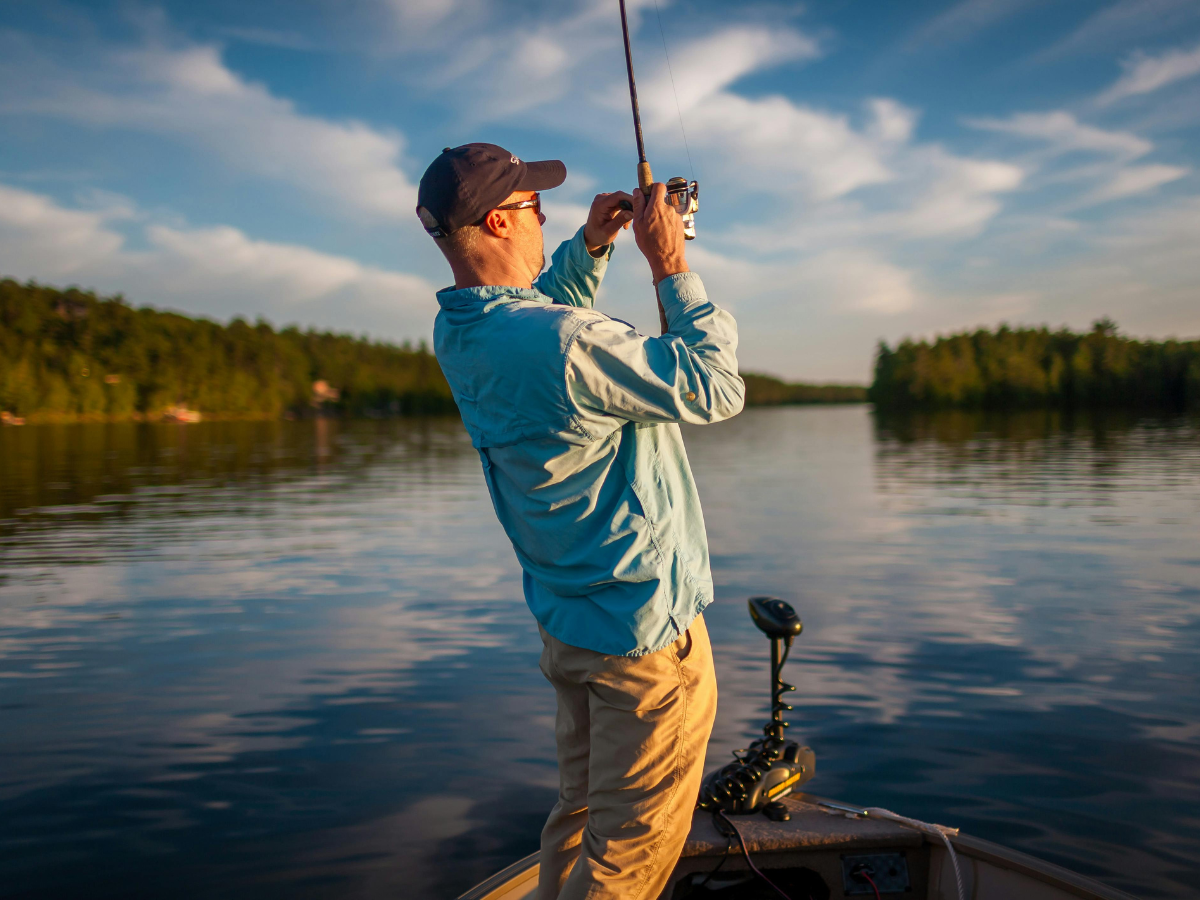
What Separates a Good Fishing Cabin from a Cabin Near Water
Most vacation rental listings in Montana include “fishing” in their amenities list. Very few of them have thought through what a fishing trip actually requires from a cabin.
A good Montana fishing cabin isn’t just close to water — it’s organized around what anglers need before they fish, while they fish, and after they fish.
Before the Fish: Gear Infrastructure
The pre-dawn organization of a fishing day involves more gear than any other outdoor activity — rods rigged and ready, waders hung to dry from the previous evening, fly boxes sorted, tippet restocked, net accessible. A cabin that makes this process smooth has:
Rod storage. A garage, a mudroom, or a covered porch where rods can be stored assembled overnight without being knocked over. Broken rod tips from inadequate storage are the most preventable equipment failure in fly fishing.
Wader drying space. Wet waders hanging in a bedroom closet or draped over a bathroom door are a logistical problem on a multi-day trip. A covered porch, a mudroom hook system, or an outdoor drying area matters for anglers fishing consecutive days.
Chest freezer access. For anglers keeping fish — kokanee salmon and bass are the primary kept species in Northwest Montana — chest freezer space is essential for a multi-night stay. Ask specifically whether the property has a chest freezer or significant chest freezer space, not just a standard refrigerator with a freezer compartment.
Fly tying space. For serious fly anglers who tie streamers and nymphs in the evening for the following morning, a table with adequate light and space — separate from the dining area if possible — is a meaningful amenity. Rare in rental listings; worth asking about.
During the Fish: Access and Proximity
The definition of “fishing access” in Montana rental listings covers everything from a private dock extending into deep productive water to a property that mentions a creek crossing the property line at one corner. The specifics matter enormously.
Private dock access. A dock that extends into water deep enough to fish productively — not a platform over three feet of muddy shoreline. Ask for the approximate water depth at the dock’s end and whether dock fishing produces results at the species you’re targeting.
Bank and wading access. For river-fishing stays, confirm whether the bank is accessible and wadeable from the property or whether you need to drive to a public access point. Some riverfront properties sit above steep or private banks that prevent direct water access despite appearing “on the river” in listing photos.
Distance to public access points. For lake fishing beyond the property’s shoreline, confirm the distance to the nearest boat launch. For river fishing, confirm the distance to the most productive tailwater sections relative to the property.
After the Fish: Recovery Infrastructure
Fish cleaning station. A proper cleaning station — or at minimum an outdoor utility sink, a hose, and a surface that can be cleaned — is standard at properties that regularly host anglers. Its absence suggests the property hasn’t thought through the fishing experience.
Hot tub or deep soaking bath. Standing in waders in cold water for five hours is physically demanding in ways that other outdoor activities aren’t. A hot tub that works in all seasons isn’t a luxury on a fishing trip — it’s how you fish consecutive days without destroying your back.
Full kitchen. Anglers who keep their catch need a kitchen where they can actually cook a fish dinner. Confirm the kitchen has adequate pans, cooking oil, and counter space — not just a two-burner hotplate with one skillet.
Montana’s Best Fishing Cabin Destinations
Bull Lake: The Complete Fishing Cabin Experience
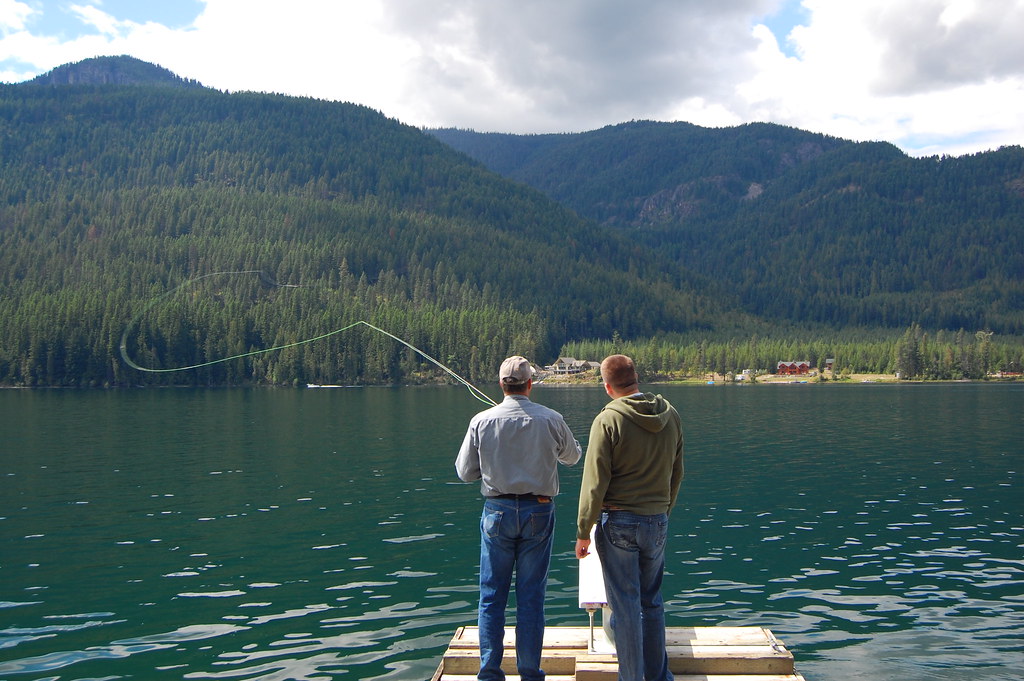
Bull Lake is the most complete fishing cabin destination in Northwest Montana for anglers who want variety, private dock access, and the combination of lake and river fishing without relocating between them.
Shangrilog on Bull Lake is built around what a fishing stay actually requires — a private dock extending into productive lake water, 85 feet of private shoreline for bank fishing, a fully equipped kitchen for preparing the catch, a hot tub for post-fishing recovery, and 3,000 square feet with four bedrooms that accommodate a fishing group of up to 10 without anyone on a couch.
The fish accessible from Shangrilog’s dock represent genuine variety across species and technique: kokanee salmon by trolling and jigging in the deeper water; rainbow trout and cutthroat on dry flies and nymphs in the shallower coves; smallmouth and largemouth bass on streamers and surface poppers in the warmer months; yellow perch year-round as a reliable dock option during slow periods.
Twenty minutes east on Highway 2, the Kootenai River Gold Medal tailwater extends the fishing day into a completely different experience — technical wade fishing on a large, cold tailwater for wild rainbow trout that don’t see the pressure of the Madison or the Missouri. The combination of Bull Lake dock fishing in the morning and Kootenai River wade fishing in the afternoon covers two entirely different fishing disciplines from one cabin without moving your base.
Primary species: Kokanee salmon, rainbow trout, cutthroat trout, bull trout (catch and release), largemouth and smallmouth bass, northern pike, yellow perch.
Best seasons by species:
Kokanee salmon: Fall (September–October) for the primary run when fish concentrate and become most catchable by trolling or jigging. Spring emergence typically in April–May.
Rainbow and cutthroat trout: Year-round with peak activity in spring (April–May) and fall (September–October). Summer morning sessions on the dock productive before water temperatures peak midday.
Bass: Summer primary season (June–August) when water temperatures warm and surface feeding activity is highest. Early morning topwater fishing from the dock is the peak experience.
Perch: Year-round including ice fishing in winter when conditions permit.
License: Montana fishing license required, available online at Montana Fish, Wildlife & Parks or sporting goods stores in Troy and Libby. Bull trout are present in Bull Lake and must be released — familiarize yourself with current regulations before fishing.
Kootenai River: Gold Medal Tailwater
The Kootenai River tailwater below Libby Dam deserves a longer section than most Montana fishing guides give it, because it’s genuinely in the same category as the state’s most famous tailwaters — larger fish, year-round productivity, technically demanding water — with a fraction of the guided angler traffic.
The tailwater’s character is shaped by Libby Dam’s cold-water releases: consistent temperatures year-round that maintain cold, clear water even through Montana’s warmest summers. This is the fishery’s defining advantage over freestone streams — when every other river in the region is warm and low in August, the Kootenai is fishing as well as it does in October.
Wild rainbow trout: The primary target. Fish averaging 14–18 inches, with 20-inch-plus trout caught regularly. These are wild fish in unmanipulated habitat — they’re selective, aware, and rewarding in a way that hatchery fish aren’t.
Bull trout: Federally threatened. Present in the Kootenai system and must be released immediately if caught. Their presence is an indicator of exceptional water quality — the Kootenai’s bull trout population is one of the reasons the fishery matters ecologically.
Mountain whitefish: Abundant year-round, excellent on nymphs. Often dismissed by visiting anglers focused on trout, but valuable as consistent targets during technical conditions.
Smallmouth bass: Present in the warmer, slower lower sections approaching the Idaho border. Summer surface fishing for smallmouth in the lower Kootenai is an underutilized opportunity.
The Kootenai Hatch Calendar
Spring (April–May): Skwala stoneflies and early caddis begin hatching as flows drop from snowmelt peak. Early season nymphing productive throughout. Streamer fishing for large trout in high, off-color water.
Summer (June–August): PMDs, caddis, and summer stoneflies produce consistent dry fly opportunities. The tailwater’s temperature advantage is most apparent now — fishing is productive when other Montana rivers have gone off. Morning sessions before noon are most consistent.
Fall (September–November): The baetis hatch — the Kootenai’s signature event. Blue-winged olives emerging in afternoon light produce some of the most technically demanding and most rewarding dry fly fishing available on any Montana tailwater. October is the peak month. Fish are pre-winter feeding actively and the selective presentations required for late-season rising fish are what serious dry fly anglers specifically train for.
Winter (December–March): The Kootenai fishes year-round — midges and small baetis produce surface activity even in winter. Nymphing under strike indicators is the most consistent winter approach. The fishery’s cold water temperatures mean winter fish are active and feeding, unlike warmer-water rivers where fish become sluggish.
Guided vs. Self-Guided on the Kootenai
For a first visit, a local guide is the highest-value investment available on this river. The Kootenai has specific access points, productive runs, and seasonal patterns that take multiple visits to learn independently. A guided float opens sections of the river that bank anglers can’t reach from public access points and significantly increases catch rates on a first or second trip.
Guided float rates: $350–$550 per angler per day for a full-day float trip with a licensed local guide. Half-day wade trips are available at lower rates.
What to ask when booking a guide: Ask specifically about their experience on the Kootenai River — not “Northwest Montana rivers” generally. A guide who primarily works the Flathead drainage will not have the same Kootenai-specific knowledge as one who has guided this tailwater for years. Ask for recent client reports from the current season.
Self-guided access: Multiple public fishing access points are maintained by Montana Fish, Wildlife & Parks between Libby Dam and Troy. The Kootenai is wide enough that drift boat access covers significantly more productive water than bank fishing alone — boat rentals are available locally.
For complete lodging options along the Kootenai River corridor closest to the best tailwater access, see Kootenai River Lodge Stays →
Lake Koocanusa: Kokanee Salmon Destination
Lake Koocanusa is a 90-mile reservoir that draws anglers specifically for one annual event: the kokanee salmon run in September and October. Kokanee — landlocked sockeye salmon — complete their spawning migration in the upper reservoir sections during fall, concentrating in numbers and becoming highly catchable by trolling, jigging, and casting.
The fall kokanee run on Koocanusa is one of the most reliable and most underappreciated fishing events in Northwest Montana. Anglers who time their stay for late September through mid-October — when fish are actively running, water temperatures are optimal, and the surrounding larch trees have turned gold — encounter some of the most consistent bait fishing available anywhere in the region.
Technique: Trolling wedding ring spinners and small spoons at 2–3 mph in the 20–40 foot depth range. Jigging with small tube jigs and flash rigs is effective during active feeding periods. Kokanee hit aggressively during peak run periods — this is not technical fishing. Volume and action per hour are typically high.
Kokanee as table fish: Kokanee salmon are exceptional eating — mild, firm, with higher fat content than most trout species. A properly handled and cleaned kokanee is one of Montana’s best-tasting freshwater fish. The chest freezer becomes important for anglers planning to bring fish home.
Beyond the kokanee run: The reservoir holds rainbow trout, bull trout, and northern pike throughout the season. Northern pike fishing on Koocanusa in early summer — before the main body of the reservoir warms — can produce large fish on streamer gear.
For Libby-area lodging with access to both Koocanusa and the Kootenai River, see Libby Montana Cabin Rentals →
Cabinet Mountains Backcountry Streams: Native Cutthroat
The tributary streams draining the Cabinet Mountains Wilderness are one of the most rewarding and least-visited fishing experiences in Northwest Montana — a category that exists largely outside the awareness of visiting anglers because the fish are small by Montana standards and the access requires hiking rather than driving.
Native westslope cutthroat trout in the Cabinet Mountain streams are wild fish in genuinely wild habitat. They’re not large — 8–12 inches is typical, with occasional 14–16-inch fish in the better pools — but they’re aggressive, beautiful, and found in water that hasn’t been fished recently by anyone else. The solitude of a backcountry stream fishing day in the Cabinets is the experience, not the fish count.
Technique: High-sticking with dry flies and soft hackles in pocket water. Presentation accuracy matters more than fly selection — these fish respond to anything that lands correctly. Light tippet (5X–6X) and small flies (#14–#18) are standard.
Access: Trailheads for Cabinet Mountains streams are accessible from the Bull River Road south of Troy, typically within 30–45 minutes of a Bull Lake basecamp. Hiking 2–5 miles into the wilderness accesses water that sees almost no pressure. The streams are small enough that a standard day pack with a 3-weight or 4-weight rod is appropriate — no waders required in most sections.
Combined with hiking: Cabinet Mountain stream fishing combines naturally with a hiking-focused day — the streams run alongside the trails, and fishing the pockets between hiking stretches is how most experienced anglers approach this water. The best stream sections are typically in the middle miles of the approach hikes, away from the trailheads where any pressure that exists is concentrated.
For a guide to cabins organized specifically around Cabinet Mountains wilderness access, see Cabinet Mountains Wilderness Rentals →
Montana Fishing Cabin Rentals: Platform and Booking Guide
Where to Search
Vrbo has the most comprehensive inventory of larger fishing-oriented cabin rentals in Northwest Montana — properties with multiple bedrooms and gear storage that accommodate fishing groups of 4–8. Filter by “waterfront” and minimum bedroom count; then read descriptions specifically for dock access and fishing mentions.
Airbnb skews smaller in the Northwest Montana market — more 1–2 bedroom properties. Better for couples or solo anglers than for fishing groups.
Direct booking is the preferred approach for the best fishing cabin properties. Shangrilog on Bull Lake books directly — no platform service fees (12–16% of total on Airbnb, 6–12% on Vrbo), direct communication with owners who know the fishing conditions, and flexible arrangements for guide pickups and early morning departures.
Recreation.gov for Forest Service cabin rentals — rustic properties at $50–$100 per night that put you in genuine backcountry proximity to Cabinet Mountains streams and Kootenai National Forest waters. No amenities, but maximum proximity to the most remote fishing available in the region.
What to Verify Before Booking a Fishing Cabin
These are the specific questions that prevent disappointment:
“What species are catchable from the dock or shoreline?” Not “is there fishing nearby” — which species, from which structure, with which technique. An owner who can answer this specifically is a fishing resource. An owner who says “good fishing nearby” is not.
“Is there covered storage for assembled fly rods?” Specifically asking about assembled rods reveals whether the property has thought about the fishing experience. Standard vacation rentals have no rod storage system. Properties that host anglers regularly have solved this problem.
“Does the property have a chest freezer?” For keeping kokanee salmon or bass, a standard refrigerator freezer is inadequate for a group stay. Chest freezer availability is a meaningful differentiator.
“What is the water depth at the end of the dock?” Deep enough to fish productively is typically 8–15 feet for trolling kokanee, 4–8 feet for casting to trout. A dock in 2–3 feet of water is a swimming dock, not a fishing dock.
“Can you recommend local guides for the Kootenai River?” The answer reveals whether the owner is connected to the local angling community — a resource that turns an adequate fishing trip into an exceptional one.
Booking Timeline for Montana Fishing Cabins
Peak summer (July–August): 3–5 months in advance for Bull Lake. 2–4 months for Kootenai corridor properties.
Fall fishing season (September–October): This is the most important window to book early. Serious anglers targeting the kokanee run, the baetis hatch, and fall trout activity all converge on the same 6-week window. Quality properties fill 2–3 months ahead for October dates specifically. If you’re planning a fall fishing trip, start looking in July or August.
Spring (April–May): 2–4 weeks is often sufficient for most properties. Excellent value window for anglers who don’t need summer temperatures.
Winter (November–March): Shangrilog operates year-round. 2–4 weeks typically sufficient outside holiday periods.
Montana Fishing Licenses and Regulations
A Montana fishing license is required for all anglers age 12 and older. Purchase before arriving — you’ll want to fish on the first morning, not spend it driving to find a license vendor.
Online purchase: Montana Fish, Wildlife & Parks — instant delivery, printable or digital license.
In-person: Sporting goods stores in Troy and Libby both sell Montana fishing licenses. Troy’s sporting goods options are limited; stock up in Libby if passing through.
Resident vs. non-resident: Non-resident licenses are required for out-of-state anglers. A non-resident conservation license plus a fishing license is the standard combination — confirm the current fee structure on the FWP website as rates adjust annually.
Species-specific regulations to know:
Bull trout: Federally threatened. Present in Bull Lake, the Kootenai River, and Cabinet Mountains streams. Must be immediately released. They look similar to brook trout — know the identification before fishing.
Kokanee salmon: Regulations on Koocanusa and Bull Lake vary by water body and season. Check current FWP regulations for specific limits and methods before targeting kokanee.
Catch-and-release only waters: Some sections of the Kootenai River have specific regulations. Confirm current regulations for the specific section you’re fishing.
The regulation resource: Montana FWP publishes annual fishing regulations with detailed water-by-water rules. Download the current regulation booklet at fwp.mt.gov before your trip and carry a copy in the field.
Fishing Cabin Packing List for Northwest Montana
A fishing trip to Northwest Montana requires more specific preparation than most destination fishing trips. This list covers what experienced Kootenai and Bull Lake anglers bring:
Rods and reels:
-
- 5-weight for Bull Lake dry fly and nymphing
-
- 7-weight or 8-weight for Kootenai River streamer fishing and larger trout
-
- 9-foot leaders (standard), 12-foot leaders (technical dry fly on the Kootenai tailwater)
-
- Extra tippet spools — 4X, 5X, 6X
Flies:
-
- Baetis/BWO patterns in #16–#20 (Kootenai fall hatch essential)
-
- Caddis dry flies #14–#16 (summer Kootenai)
-
- PMD/pale morning dun #16–#18
-
- Streamers: Sculpins, articulated patterns, Woolly Buggers #4–#8
-
- Soft hackles and hares ear nymphs #14–#18 (Cabinet Mountain streams)
-
- Kokanee jigs if targeting kokanee on Koocanusa
Gear:
-
- Chest waders and wading boots (felt or rubber depending on access — check current Montana regulations on felt sole restrictions)
-
- Wading staff for Kootenai River wading
-
- Bear spray — Cabinet Mountains and Kootenai National Forest (required for backcountry stream hikes)
-
- Net with rubber mesh
-
- Polarized sunglasses — essential for reading Kootenai River structure
-
- Montana fishing license (carry physical or digital copy)
Cabin-specific items:
-
- Cooler with ice for day trips to the river
-
- Knife and cutting board for cleaning fish at the cabin
-
- Fish wrap or vacuum sealer bags if planning to bring fish home
Seasonal Fishing Calendar for Northwest Montana
| Month | Bull Lake | Kootenai River | Koocanusa | Cabinet Streams |
|---|---|---|---|---|
| April | Early trout, bass emerging | Stonefly nymphing, runoff | Pike early season | Opening, small streams |
| May | Bass and trout active | Caddis beginning, flows dropping | Rainbow trout | Cutthroat active |
| June | Full season opens, dock fishing | PMDs, summer caddis | Rainbow trout | Peak small stream fishing |
| July | Bass topwater, morning trout | Summer caddis, streamer fishing | Rainbow, pike | Cutthroat all season |
| August | All species active | Tailwater advantage peaks | Rainbow, pike | Cutthroat |
| September | Kokanee run beginning, trout | Baetis hatch begins | Kokanee run peak | Cutthroat fall active |
| October | Kokanee peak, trout | Baetis hatch peak — BEST MONTH | Kokanee peak | Late season cutthroat |
| November | Trout late season | Midge and small baetis | Closing season | Season closing |
| December | Ice fishing building | Winter midge nymphing | Closed / ice | Closed |
| January | Ice fishing | Winter nymphing year-round | Closed | Closed |
| February | Ice fishing | Winter nymphing | Closed | Closed |
| March | Ice out approaching | Early stonefly nymphing | Ice out | Closed |
Frequently Asked Questions
What is the best time of year for a Montana fishing cabin rental?
Fall (September–October) is the strongest window across every Northwest Montana fishery simultaneously — the Kootenai River baetis hatch peaks, kokanee salmon run on Bull Lake and Koocanusa, kokanee concentrate in Koocanusa’s upper sections, and Cabinet Mountain stream fishing reaches its fall peak. For anglers who can visit only once, October on the Kootenai tailwater during the baetis hatch is the answer. For the full seasonal guide, see the calendar table above.
Is the Kootenai River better than the Madison or Bighorn for fly fishing?
The Kootenai tailwater is comparable in fish quality — wild rainbows averaging 14–18 inches with 20-inch fish common — to any of Montana’s famous tailwaters. The meaningful difference is pressure: the Kootenai sees a fraction of the guided angler traffic that the Madison and Bighorn carry, particularly during fall when those fisheries are at maximum demand. For anglers who prioritize wild fish in uncrowded water, the Kootenai competes with anything in the state.
Do I need a boat to fish the Kootenai River effectively?
A drift boat or jet sled opens significantly more productive water than bank fishing alone. For a first visit, a guided float is the most efficient way to cover the river’s best sections. Self-guided wading from public access points is productive but covers limited water. For Bull Lake, a kayak or small boat extends fishing access beyond the dock — kayak rentals are available locally from Troy-area outfitters.
What species can I catch from the dock at Shangrilog on Bull Lake?
Kokanee salmon (fall primary season), rainbow trout, cutthroat trout, largemouth and smallmouth bass (summer primarily), yellow perch (year-round), and northern pike in the deeper water. Bull trout are present and must be released. The dock extends into water deep enough for trolling and jigging for kokanee as well as casting dry flies and nymphs toward the shoreline structure.
How large are the rainbow trout on the Kootenai River?
Wild rainbow trout averaging 14–18 inches are standard in the tailwater section below Libby Dam. Fish over 20 inches are caught regularly by both guided and self-guided anglers. The occasional 24–26-inch fish is possible and reported seasonally. These are wild fish — not hatchery-supplemented — and they fight harder than equivalently sized fish in managed waters.
Is there good fishing for non-fly anglers at Bull Lake?
Yes. Bull Lake’s kokanee and bass fisheries are accessible and productive for conventional gear anglers — spinning rods with small spoons and spinners for kokanee, jigs and soft plastics for bass. Dock fishing with bait is productive for perch year-round. The Kootenai River can be fished with conventional gear (check regulations for specific sections), though the tailwater’s selective trout respond most consistently to fly presentations.
What fishing guide services operate near Bull Lake and the Kootenai River?
Several licensed local guides operate on the Kootenai River tailwater — ask property owners for current recommendations as the guide community in Lincoln County is small and locally connected. Shangrilog’s owners can provide current guide recommendations for guests. Guided float rates run $350–$550 per angler per full day. Half-day wade trips are available at lower rates and are particularly well-suited for the tailwater’s accessible bank sections.
Plan Your Montana Fishing Cabin Rental
Northwest Montana’s fishing is among the least-known and most productive in the American West. The Kootenai River tailwater competes with the state’s famous fisheries in fish quality and exceeds them in solitude. Bull Lake’s private dock delivers a daily fishing experience that most Montana lake rentals never approach. The Cabinet Mountains streams hold native cutthroat in water that most visiting anglers never find.
The cabin that makes this fishing accessible — private dock on a productive lake, Kootenai River tailwater 20 minutes east, Cabinet Mountains streams 30–45 minutes south — is Shangrilog on Bull Lake.
For the complete fishing and hiking cabin comparison across Northwest Montana, see the Montana Fishing & Hiking Cabins guide →
For lodging along the Kootenai River corridor specifically, see Kootenai River Lodge Stays →
For adventure-focused cabin rentals that combine fishing with other active pursuits, see Montana Adventure Vacation Rentals →
Shangrilog on Bull Lake: private dock, year-round availability, 3,000 square feet sleeping 10, fully equipped kitchen, hot tub for post-fishing recovery.