Bull Lake Cabin in Troy, Montana

Most Montana cabin searches start with the wrong question.
Travelers type “Montana cabin rentals” or “Northwest Montana vacation rentals” and filter by dates, bedrooms, and price. They find something that looks appealing, check that it mentions hiking nearby, and book it. They arrive and discover that “hiking nearby” meant a Forest Service road 45 minutes away, or a nature trail through a subdivision, or a trailhead for one moderate path that they complete by noon on the first day.
A hiking trail cabin is a different kind of search. It starts not with the cabin but with the trail — which trails do I want to hike, and which cabin puts me closest to them? It treats trailhead proximity the way a serious angler treats water proximity: not as a nice-to-have but as the organizing criterion of the entire lodging decision.
This guide is organized around that question. It covers the best hiking trail networks accessible from Northwest Montana cabin rentals, what “close to trails” actually means in practice, how to evaluate any cabin’s trail access before booking, and why Bull Lake’s position — within 30–45 minutes of the Cabinet Mountains Wilderness, Ross Creek Cedars, Kootenai Falls, and the Kootenai National Forest trail network — makes it the strongest multi-trail basecamp in Lincoln County.
For the full overview of Montana fishing and hiking cabin options, see the Montana Fishing & Hiking Cabins guide →

What “Trail Access” Actually Means for Cabin Hikers
The Proximity Question
Trail access in Montana cabin rental listings spans a range that the word “nearby” obscures completely. In practice:
Immediately accessible (0–5 minutes): Forest Service cabins at or near trailheads. Some remote wilderness cabins. Rarely found in the private vacation rental market except for properties specifically in national forest settings.
Genuinely convenient (15–30 minutes): The practical sweet spot for hiking-focused cabin stays. Close enough to enable 7 AM trailhead arrivals without a logistically demanding morning. Multiple trailheads accessible from the same basecamp. This is what most experienced hiking travelers actually want.
Technically accessible (30–60 minutes): Broader day trip range. Possible for motivated hikers but adds commute time that cuts into trail time on full-day routes. Worth accepting for properties that compensate with exceptional amenities, lakefront access, or multiple activity options beyond hiking.
Destination-level day trips (60–90 minutes+): Glacier National Park from a Bull Lake basecamp, the Flathead divide from a Libby base. Possible as one-day excursions on a multi-night stay, not as daily hiking infrastructure.
Bull Lake’s position delivers the genuinely convenient range for most Northwest Montana hiking: Cabinet Mountains Wilderness trailheads 30–45 minutes, Kootenai Falls trail 35 minutes, Ross Creek Cedars 30–40 minutes, Bull River corridor trail 20–25 minutes. Glacier National Park 2–2.5 hours — a full-day trip option, not daily hiking infrastructure.
The Trailhead Quality Question
Proximity to a trailhead is only half the question. The other half is what kind of hiking that trailhead provides.
Wilderness trailheads provide access to roadless backcountry — no mountain bikes, no motorized vehicles, genuine solitude. The Cabinet Mountains Wilderness trailheads accessible from Bull Lake fall into this category.
National Forest trailheads provide access to maintained Forest Service trails — typically multi-use, well-signed, varying difficulty. The Kootenai National Forest’s 1,200+ miles of maintained trails include routes accessible from the Bull Lake and Troy corridor.
Scenic area trailheads provide access to interpretive or conservation areas — Ross Creek Cedars, Kootenai Falls. Lower difficulty, higher accessibility, significant natural character.
Developed recreation area trailheads provide access to groomed, heavily maintained trails near popular destinations. Not typically what hiking-focused cabin travelers are seeking.
The best hiking trail cabins provide access to the first two categories — wilderness and national forest trail systems — where the hiking is genuine rather than managed.
Northwest Montana’s Best Hiking Trail Networks
Cabinet Mountains Wilderness — Alpine Wilderness Trails
Difficulty range: Moderate to very strenuous Season: Late June through October Distance from Bull Lake: 30–45 minutes to main trailheads Permit required: No
The Cabinet Mountains Wilderness trail network is the premier hiking destination accessible from a Bull Lake or Troy-area cabin basecamp — 94,272 acres of roadless backcountry with over 30 alpine lakes, peaks above 8,000 feet, and trail quality that rivals national park wilderness areas with a fraction of the visitor traffic.
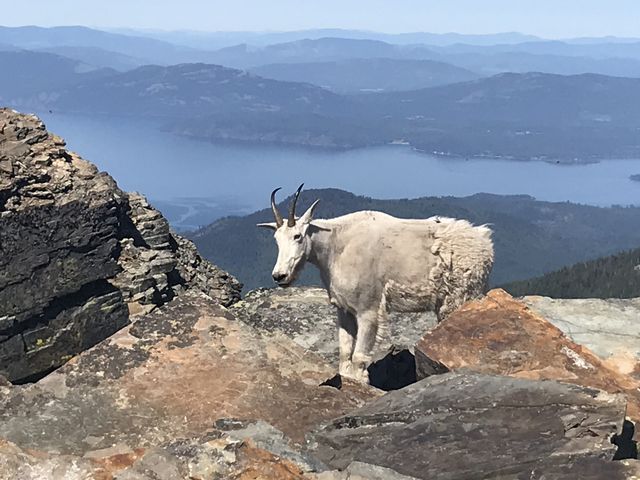
Scotchman Peak Trail: The signature hike. 10 miles roundtrip, 3,800 feet of gain, summit views of Montana, Idaho, and British Columbia. Full-day commitment for most hikers. Mountain goats on the upper ridgeline. Western larch gold on the approach in fall. This is the hike that Bull Lake guests describe when they explain why they’re booking their return trip.
Engle Lake Trail: 9–11 miles roundtrip, 3,200–3,600 feet of gain. A remote alpine lake in a deep cirque — the premier backcountry overnight destination in the Cabinets. Very strenuous as a day hike; more naturally suited to an overnight from a Bull Lake cabin basecamp.
Lower Cabinet Mountains perimeter trails: Multiple shorter routes accessible from Bull River Road trailheads — 2–6 miles roundtrip, moderate difficulty, forest and canyon character without the full elevation commitment of the summit routes. Good options for hiking groups with mixed fitness levels.
For a dedicated guide to the Cabinet Mountains Wilderness hiking and cabin experience, see Cabinet Mountains Wilderness Rentals →
Kootenai National Forest Trail Network — 1,200+ Miles
Difficulty range: Easy to strenuous Season: Year-round at lower elevations; June–October at higher elevations Distance from Bull Lake: 15–45 minutes to various trailheads Permit required: No
The Kootenai National Forest’s 2.2-million-acre footprint contains over 1,200 miles of maintained trails — the most extensive trail network accessible from a Bull Lake or Troy-area basecamp. This network covers six ranger districts with dramatically different terrain and trail character, meaning that a hiking-focused stay of 5–7 nights can access a different trail each day without retracing routes or exceeding a 45-minute drive.
Bull River Trail (Troy Ranger District): The most accessible trail from Bull Lake — a valley-floor route following the Bull River through old-growth forest and wildlife-rich riparian corridor. Multiple trailheads along Bull River Road, 20–30 minutes from Shangrilog. Easy to moderate, appropriate for families with children and beginning hikers. Excellent moose and elk habitat throughout.
Northwest Peaks Scenic Area (Three Rivers Ranger District): High-country terrain on the Montana-Idaho border north of Troy. Several routes to viewpoints and small alpine lakes, accessible via Forest Service roads. Less visited than the Cabinet Mountains Wilderness corridor. Moderate to strenuous. Check current road conditions before planning — some access roads require high clearance.
Ten Lakes Scenic Area (Eureka Ranger District): A cluster of mountain lakes in high country north of Eureka, accessible via Grave Creek Road. Approximately 1.5–2 hours from Bull Lake — at the outer edge of convenient day trip range. Outstanding scenery with minimal crowds. Worth the drive on a dedicated day from an extended stay.
Scotchman Peaks area trails (Troy Ranger District): Beyond the Scotchman Peak summit route, the surrounding Scotchman Peaks area contains several additional trail options in the same drainage — shorter routes with forest and stream character that provide a lower-commitment alternative to the summit on rest days or for less experienced hikers in a mixed-ability group.
Ross Creek Cedars — Old-Growth Interpretive Trail
Difficulty: Easy (boardwalk, all abilities) Season: Late May through October (access road may close in winter/spring) Distance from Bull Lake: 30–40 minutes south on Highway 56 Permit required: No
Ross Creek Cedars is the most accessible significant hiking experience in the Bull Lake corridor — a one-mile boardwalk loop through western red cedars 500–1,000 years old and up to 175 feet tall. The trail is flat, well-maintained, and appropriate for all fitness levels including families with young children and older visitors.
The grove’s character is genuinely extraordinary — walking among trees that were ancient before European contact with North America resets your sense of scale in a way that even dramatic mountain scenery doesn’t always achieve. The boardwalk protects the root systems while providing intimate access at ground level.
This trail functions as the rest-day or recovery-day option from a Bull Lake hiking basecamp — a meaningful and memorable outdoor experience that requires no physical preparation, no early start, and no post-hike recovery. Visit the cedars the morning after Scotchman Peak.
For lodging specifically near Ross Creek Cedars, see Ross Creek Cedars Area Lodging →
Kootenai Falls Trail — Canyon Accessible Trail
Difficulty: Easy to moderate Season: Year-round when Highway 2 is clear Distance from Bull Lake: 35 minutes east on Highway 2 Permit required: No
The Kootenai Falls trail is a 1.2-mile roundtrip walk from the Highway 2 parking area to the viewpoint above Montana’s largest undammed waterfall and the swinging bridge downstream. Accessible to virtually all fitness levels, free to visit, and available in every season.
For hiking-focused cabin travelers, Kootenai Falls functions as a different kind of trail experience than the wilderness routes — an accessible, dramatic, and culturally significant walk through old-growth ponderosa pine to one of the most compelling natural sites in Northwest Montana. The trail is appropriate on any day — the morning before Scotchman Peak, the afternoon after a long wilderness day, a rainy morning when higher trails are inadvisable.
For complete lodging guidance nearest Kootenai Falls, see Kootenai Falls Area Lodging →
Glacier National Park — Full Day Trip Hiking
Difficulty range: Easy to very strenuous Season: July through mid-October for high trails (Going-to-the-Sun Road dependent) Distance from Bull Lake: 2–2.5 hours east on Highway 2 Permit required: Vehicle reservation required for Going-to-the-Sun Road corridor during peak season (book at Recreation.gov)
Glacier National Park is at the outer edge of day trip range from a Bull Lake basecamp — 2–2.5 hours each direction, making it a full-day commitment that works well on one or two days of an extended stay. The park’s trail network is among the most dramatic in the American West.
For a Glacier day trip from Bull Lake:
Avalanche Lake (5.9 miles roundtrip, 500 feet gain): The most accessible classic Glacier hike — old-growth cedar forest, a glacially carved canyon, and a dramatic alpine lake. Appropriate for most fitness levels. Best early-season option when higher trails are still closed.
Highline Trail (11.8 miles, 800 feet gain from Logan Pass): The park’s signature ridgeline route — the Garden Wall viewpoint, dramatic Glacier interior panoramas, and consistent wildlife sightings. Requires a vehicle reservation for the Logan Pass starting point.
Hidden Lake Overlook (2.7 miles roundtrip from Logan Pass, 540 feet gain): The most dramatic short hike in the park. Mountain goats and bighorn sheep routinely visible on the slopes.
Iceberg Lake (9.7 miles roundtrip, 1,275 feet gain from Many Glacier): Many Glacier valley, widely considered the park’s most scenic drainage. Floating icebergs in the lake through July.
A vehicle reservation for the Going-to-the-Sun Road corridor is required during peak season (typically late May through early September) — book through Recreation.gov before your trip.
Building a Hiking Trail Cabin Itinerary from Bull Lake
One of the practical advantages of Bull Lake as a hiking basecamp is the range of trail difficulty levels accessible from the same property — enabling a genuine mixed-ability group to have a strong hiking experience without everyone doing the same trail.
Sample 5-Night Hiking Itinerary from Shangrilog:
Day 1 (Arrival): Evening hike on the Bull River Trail — 20–30 minutes from the cabin, flat, wildlife-rich. Get the legs moving after the drive. Identify moose in the river corridor.
Day 2 (Summit Day): Scotchman Peak — leave cabin at 7 AM, reach trailhead by 7:45 AM, summit by noon, return to cabin by 4–5 PM. Hot tub and rest.
Day 3 (Rest Day): Ross Creek Cedars morning — 30–40 minutes south. Two hours in the ancient grove. Afternoon dock fishing and kayaking on Bull Lake.
Day 4 (Moderate Day): Northwest Peaks or lower Cabinet Mountains perimeter trail — 4–6 miles, 1,500–2,000 feet. Appropriate for the group member who found Day 2 too demanding. Late afternoon Kootenai Falls visit (35 minutes east) — different light than a morning visit.
Day 5 (Backcountry Day): Engle Lake approach — leave early, hike to the wilderness lake and back. Full day. This works best as an overnight trip for the right group, but is doable as a very long day for fit, experienced hikers.
Day 6 (Departure Day): Morning paddle on Bull Lake. Pack out.
Six days, six different trail experiences — wilderness summit, old-growth boardwalk, Forest Service valley trail, moderate national forest route, subalpine lake approach, and a lake morning. All from the same cabin.
Evaluating Hiking Trail Access Before Booking Any Montana Cabin
The Questions to Ask
These are the specific questions that separate a good hiking cabin from a cabin near mountains:
“What is the name and distance of the nearest established trailhead?” Not “are there hiking trails nearby” — the specific name of a trailhead. An owner who can answer this specifically knows their property’s trail access. An owner who gives a vague answer does not.
“Is the access road to that trailhead paved, gravel, or Forest Service road?” Some Northwest Montana trailheads require high-clearance vehicles or four-wheel drive on Forest Service roads, particularly in spring and after wet weather. A standard rental car is not always suitable for the full drive to trailhead parking.
“When does that trail typically become snow-free in spring?” High-elevation trails in the Cabinet Mountains are typically inaccessible until late June or early July. An owner who knows this information is a genuine hiking resource.
“Is there a hot tub or deep soaking bath at the property?” For any hiking stay of 3+ days with full-day wilderness routes, post-hike recovery infrastructure is the difference between being able to hike on day two or three and being limited by muscle fatigue. Ask specifically — not just “what amenities does the property have.”
“What bear safety equipment is available or required for the nearby trails?” Bear spray is necessary for Cabinet Mountains Wilderness hiking. An owner who knows this — and ideally can indicate where bear spray is sold locally — is operating a hiking cabin rather than a cabin that mentions hiking in its marketing.
What Shangrilog Provides
For hiking-focused stays at Shangrilog on Bull Lake:
-
- Nearest established trailhead: Bull River Trail access approximately 20–30 minutes
-
- Scotchman Peak trailhead: 35–45 minutes via Highway 2 and Forest Service roads
-
- Road to Scotchman Peak trailhead: Paved to Forest Service road, standard vehicle accessible in summer
-
- Snow-free season for Scotchman Peak: Typically late June to early July, October for first snow
-
- Hot tub: Yes — on the upper deck overlooking Bull Lake, operational year-round
-
- Bear spray: Available in Troy and Libby sporting goods stores; owners can advise on current local conditions
Trail Difficulty Guide for Northwest Montana Hikers
Easy Trails (Appropriate for All Fitness Levels)
Ross Creek Cedars Boardwalk: 1 mile, flat, boardwalk surface. No elevation gain. Accessible to all mobility levels.
Kootenai Falls Trail: 1.2 miles roundtrip, minimal elevation change. Natural surface trail. Accessible to most visitors.
Bull River Trail (lower sections): Variable length, flat valley floor, river corridor. Natural surface. Good for families with children.
Libby Dam Overlook: Short walk to dam overlook and visitor center. Paved path. Educational stops throughout.
Moderate Trails (Good General Fitness Required)
Bull River Trail (upper sections): 4–8 miles depending on turnaround, moderate terrain, forest and creek character.
Northwest Peaks Scenic Area routes: 4–8 miles, 1,500–2,500 feet gain, Forest Service road approach.
Lower Cabinet Mountains perimeter trails: 3–6 miles, 1,000–2,500 feet gain. Forest character transitioning to wilderness perimeter.
Glacier — Avalanche Lake: 5.9 miles roundtrip, 500 feet gain. Accessible family hike. Heavy use during peak season.
Strenuous Trails (Strong Fitness and Full-Day Commitment Required)
Scotchman Peak: 10 miles roundtrip, 3,800 feet gain. Full day. Bring layers, rain gear, extra food and water. Leave early to avoid afternoon thunderstorms above treeline.
Glacier — Highline Trail: 11.8 miles, 800 feet gain (but sustained ridgeline exposure). Full day. Vehicle reservation required for Logan Pass.
Glacier — Iceberg Lake: 9.7 miles roundtrip, 1,275 feet gain. Many Glacier valley. Full day. Grizzly bear habitat.
Very Strenuous / Backcountry (Experienced Hikers, Overnight Capability Recommended)
Engle Lake: 9–11 miles roundtrip, 3,200–3,600 feet gain. Very strenuous as a day hike — better suited to overnight. Bear canister required for overnight.
Cabinet Mountains alpine lake routes: Variable, typically 8–12 miles roundtrip with significant elevation. Remote settings with minimal trail infrastructure in the interior.
Seasonal Trail Conditions for Northwest Montana
Spring (April–May): Valley Trails Only
Lower-elevation trails — Bull River corridor, Kootenai Falls, Ross Creek Cedars (from mid-May) — accessible from late April. Wildflower displays on lower slopes through May. Higher trails (Cabinet Mountains Wilderness, Scotchman Peak) remain snowbound — typically inaccessible until late June or early July.
Road conditions to some trailheads can be challenging in spring mud season. Confirm current access conditions with the Kootenai National Forest Troy Ranger District before planning spring high-country attempts.
Summer (June–August): Full Trail Access
All Northwest Montana trails accessible by mid-July. Peak wildflower displays in alpine meadows July–August. Afternoon thunderstorm activity common in the Cabinets — plan summit attempts with early morning starts. Glacier trails fully open and at their busiest — vehicle reservations required for Going-to-the-Sun Road.
Mosquitoes and flies can be significant at lower-elevation, wetter trails (Bull River corridor, creek drainages) through mid-July. Above treeline, insect pressure drops significantly.
Fall (September–October): The Optimal Window
All trails accessible through early October before first significant snowfall. Western larch color peaks late September through mid-October across the Kootenai National Forest — the most visually spectacular hiking season. Significantly fewer people than summer on all trails. Wildlife highly active — elk, deer, moose, and bear all visible throughout the trail network.
First snow typically reaches higher elevations (Cabinet Mountains Wilderness, Scotchman Peak summit) in mid to late October. The window between larch peak color and first significant snow — roughly September 25 through October 15 in most years — is the best hiking week available in Northwest Montana.
Winter (November–March): Snowshoe and Ski Season
Lower-elevation Forest Service trails accessible on snowshoes from November. Bull River corridor and lower Kootenai National Forest routes are good winter snowshoe options accessible from a Bull Lake basecamp. High-elevation trails require winter backcountry skills, avalanche awareness, and appropriate equipment.
Shangrilog operates year-round — fully winterized with Turner Mountain Ski Area (30–40 minutes) as the primary winter trail recreation anchor for guests who want lift-served terrain.
Comparing Montana Hiking Trail Cabin Options
| Cabin Location | Nearest Trailhead | Trail Difficulty Range | Glacier Day Trip | Best For |
|---|---|---|---|---|
| Bull Lake (Shangrilog) | Bull River Trail 20–30 min | Easy to very strenuous | 2–2.5 hrs | Groups, mixed ability, multi-trail |
| Troy area cabins | Scotchman Peak 25–35 min | Moderate to very strenuous | 2–2.5 hrs | Closest wilderness access |
| Libby area cabins | Cabinet Mountains 45–60 min | Moderate to strenuous | 1.75–2 hrs | Service access + eastern approach routes |
| West Glacier cabins | Glacier NP 0–15 min | Easy to very strenuous | 0 min | Glacier-focused trips only |
| Forest Service cabins | 0–5 min (trailhead adjacent) | Wilderness routes | 2.5–3.5 hrs | Maximum trail immersion, rustic |
For travelers whose primary trip motivation is Northwest Montana hiking — Cabinet Mountains, Kootenai National Forest, and access to Glacier as a day trip option — Bull Lake provides the strongest multi-trail basecamp in the region. Troy-area properties offer slightly closer proximity to the Scotchman Peak trailhead at lower price points. Glacier-area cabins sacrifice all non-Glacier trail access for park proximity.
Frequently Asked Questions
What is the best cabin basecamp for hiking in Northwest Montana?
Bull Lake provides the strongest multi-trail basecamp for hikers who want access to diverse trail types — wilderness summit routes, old-growth interpretive trails, valley forest trails, and Glacier day trips — from one property without overnight relocations. For hikers focused exclusively on Glacier National Park trails, park-adjacent cabins in the West Glacier corridor are more practical. For the full Glacier area lodging breakdown, see Cabins near Glacier National Park →
Do I need a permit to hike in the Cabinet Mountains Wilderness?
No permit is currently required for day hiking or overnight trips in the Cabinet Mountains Wilderness. No quota system exists. Leave No Trace practices are expected. Check current conditions with the Kootenai National Forest Troy Ranger District before your trip for current trail access and any wildlife closures.
Is bear spray required for Northwest Montana hiking trails?
Bear spray is strongly recommended and functionally required for responsible hiking in the Cabinet Mountains Wilderness and throughout the Kootenai National Forest. Both grizzly bear and black bear are present. Carry it accessible — hip holster — on all trail days. Available at sporting goods stores in Troy and Libby.
When do the high-elevation trails near Bull Lake open in spring?
Scotchman Peak and most Cabinet Mountains Wilderness high trails are typically snow-free by late June to early July, depending on the winter’s snowpack. Lower-elevation trails — Bull River corridor, Kootenai Falls, Ross Creek Cedars — open in April and May. Check current conditions with the Kootenai National Forest before planning high-country spring trips.
What is the best time of year for hiking trail cabin stays in Northwest Montana?
Fall (September–October) is the optimal window — all trails accessible, western larch color peaks, fewer people than summer, and wildlife highly active. The specific window between late September and early October when both the larch color is at peak and all high trails remain snow-free is the most compelling week in the entire Northwest Montana hiking calendar.
Can I hike Glacier National Park as a day trip from a Bull Lake cabin?
Yes — Glacier’s West Entrance is approximately 2–2.5 hours east via Highway 2. A Glacier day trip works best on extended stays of 4+ nights where one day is dedicated to the park. Book a Going-to-the-Sun Road vehicle reservation through Recreation.gov before your trip. For the full Glacier cabin rental guide, see Glacier National Park Cabin Rentals →
What should I carry for hiking trails near my Montana cabin?
Bear spray (accessible at the hip), 2–3 liters of water with filtration backup, layers for significant temperature swings from valley to summit, rain gear, trekking poles for steep descents, a trail map or offline GPS, first aid kit, and a Montana fishing license if combining with fishing. For the complete outdoor gear guide including adventure activities, see Montana Adventure Vacation Rentals →
Plan Your Montana Hiking Trail Cabin Stay
The right hiking trail cabin isn’t the one with the most beautiful photos or the best kitchen — it’s the one that puts you closest to the trails you came to hike, with enough space and recovery infrastructure to hike again the next morning.
For Cabinet Mountains Wilderness summit routes and backcountry lakes: Scotchman Peak and Engle Lake accessible 35–45 minutes from Bull Lake.
For Kootenai National Forest trail variety: 1,200+ miles of maintained trails accessible 20–45 minutes across multiple directions.
For Glacier National Park day trips: 2–2.5 hours east via Highway 2.
For all of it from one cabin: Shangrilog on Bull Lake.
For adventure-focused cabin stays combining hiking with fishing, kayaking, and other active pursuits, see Montana Adventure Vacation Rentals →
Shangrilog on Bull Lake: four bedrooms sleeping 10, hot tub for post-hike recovery, private dock on a pristine mountain lake, 35 minutes from Scotchman Peak, year-round availability.