Bull Lake Cabin in Troy, Montana
The Yaak Valley is the far northwest corner of Montana — a river, a two-lane highway, and a scattering of people in the Purcell Mountains north of Troy. From Shangrilog on Bull Lake it is an easy morning’s drive, and one of the few places left in the lower 48 where you can spend a whole day without cell service, a gas pump, or much traffic at all.
It is not a park. There is no visitor center, no interpretive loop, no gift shop at the end. What there is: old cedar and larch, a cold clear river, wildlife that has no idea you are coming, and a quiet that takes about twenty minutes to settle into. If that sounds like your kind of day, here is how to plan it.

The Yaak Valley sits in Lincoln County, in the extreme northwest corner of Montana, tucked up against the Idaho line and the Canadian border. It is drained by the Yaak River and lies entirely within the Kootenai National Forest — 2.2 million acres, one of the largest national forests in the state. The name is generally understood to come from a Kootenai word meaning arrow.
What makes the valley unusual is the weather. Pacific storms push inland and meet Rocky Mountain air here, producing a modified maritime climate: high precipitation, a lot of gray days, deep winter snowpack. That moisture supports rare pockets of inland temperate rainforest dominated by western red cedar and western hemlock, which is why you will hear the Yaak called Montana’s rainforest.
It is also serious wildlife country. The valley falls inside the Cabinet–Yaak grizzly recovery zone, and the forest here supports black bears, grizzlies, wolves, moose, elk, deer, and mountain lions. You are unlikely to see a bear. You should still carry spray and know how to use it.
Writer Rick Bass has lived in the Yaak for decades and written about it at length, which is how many visitors first hear of the place. Reading him beforehand is not a bad way to set expectations. The Yaak is not dramatic the way Glacier is dramatic. It is dense, green, and unhurried, and it rewards people who slow down.
From Shangrilog, head north on Montana Highway 56 to US Highway 2, then west through Troy. A few miles past town, Montana Highway 508 — the Yaak River Road — turns north off Highway 2 and follows the river 29 miles to the community of Yaak. It is 64 miles door to door and about an hour and fifteen minutes each way — more if you stop, which you will.
Fill the tank in Troy. Buy your lunch there too. Once you turn onto 508 you are past the last reliable fuel and groceries, with no cell signal to sort out a problem. This is the single most common mistake first-time visitors make.
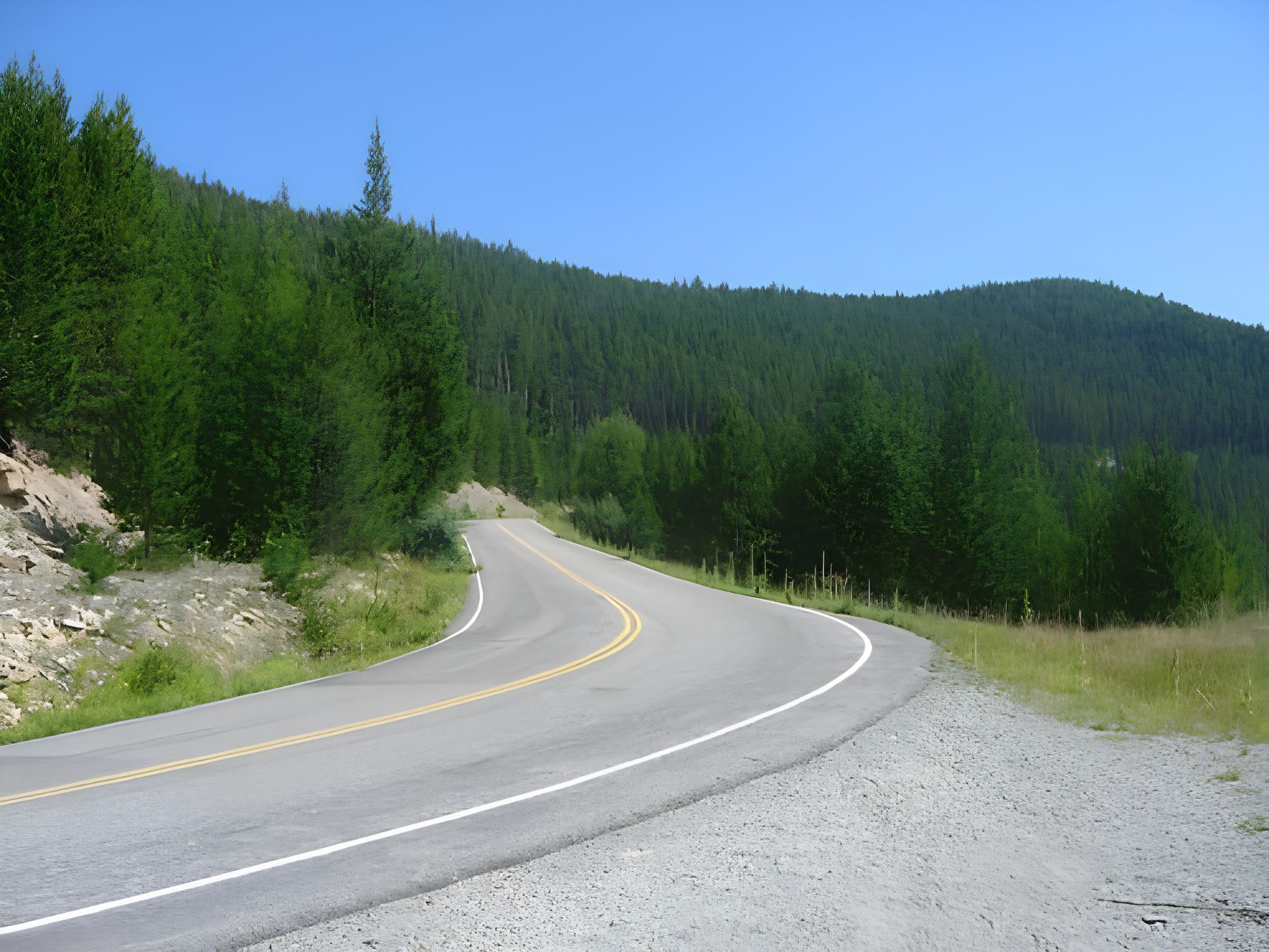
Highway 508 is paved two-lane the whole way to Yaak, and the drive itself is the main event. The road hugs the river through heavy timber and the occasional meadow, with pullouts more or less where you want them.
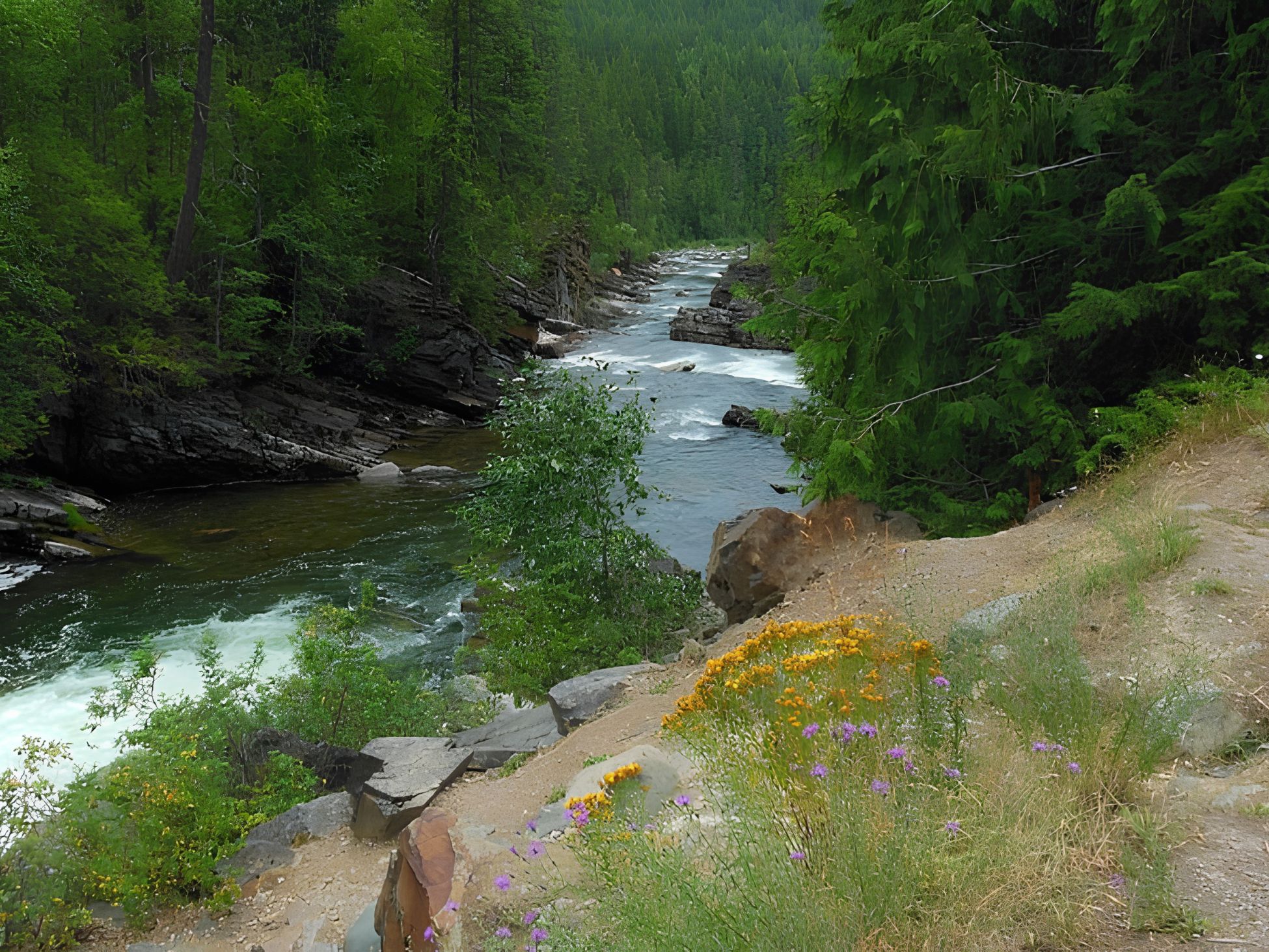
Yaak Falls comes early, a few miles up from Highway 2, with a small Forest Service campground of the same name beside it. The falls are less a single curtain than a series of chutes and drops through very old rock, and they are loudest in late spring when the snowmelt comes down. The rock is slick and the current is stronger than it looks — take it in from the bank rather than scrambling onto the ledges.
Past the falls the road levels out and the valley opens. Drive it slowly at first light or last light and your odds of seeing something — deer, a moose standing in a wet meadow, a bear crossing well ahead of you — go up considerably. None of it is guaranteed. That is part of the appeal.

Rather than doubling back, you can come home the other way. Drive up Highway 508 to Yaak, then turn south on Pipe Creek Road toward Libby and pick up US Highway 2 west — about 74 miles and an hour and thirty-five minutes on the return leg, roughly 140 miles for the full circle from Bull Lake. With a hike and a lunch stop it fills a day comfortably, and the two halves look nothing alike: river bottom and old timber going up, high country and long views coming back.
Montana’s tourism office also signs a longer version of this, the 96-mile Yaak Loop Scenic Tour, which swings north and east toward Lake Koocanusa and Highway 37 instead. That northern stretch is the one that closes for the winter. Conditions on the back roads vary season to season either way, so check current alerts with the Kootenai National Forest before you commit — or simply drive 508 up and back, which is the better half of the scenery anyway.
Call us at (406) 295-0100 and we’ll help you find the right dates for your stay at Shangrilog.
Call to Book Check AvailabilityThe Northwest Peaks Scenic Area, in the very northwest corner of the valley, is the marquee hiking destination — several trails, big timber, and peaks topping 7,700 feet, with views north into the Purcells of British Columbia and south to the Cabinet Mountains. The Pacific Northwest National Scenic Trail also crosses this country on its way from Glacier to the Pacific, so you may share a trailhead with someone who has been walking since June.
Trailhead access is by forest road, and some of those roads are rough, slow, or gated seasonally. Decent clearance helps. If you are heading somewhere specific, call the Three Rivers Ranger District in Troy at (406) 295-4693 and ask about current access.
The Forest Service rents three historic lookouts in the Yaak area seasonally — Yaak Mountain at 4,977 feet, Garver Mountain at 5,874 feet, and Mt. Baldy–Buckhorn Ridge at 6,529 feet — along with the Upper Ford Cabin on the river, available year-round. They book out far ahead on Recreation.gov and they are rustic: no electricity, no running water, pack in everything. Even if you are not staying in one, they make good hiking objectives and better photographs.
The Yaak River and its tributaries hold cutthroat, rainbow, brook, and bull trout, and there are lakes at various elevations scattered through the drainage. Bull trout are listed as threatened under the Endangered Species Act, and all Montana waters except three designated ones are closed to intentional bull trout fishing — so know what you have on the line before you handle it. A Montana license is required and regulations change year to year; check current rules with Montana Fish, Wildlife & Parks before you go. Closer to the cabin, fishing on Bull Lake is the easier morning.
Early morning and evening are the hours. Drive slowly, pull over, and let your eyes work the tree line rather than the road. Deer and elk are common, moose turn up in the wet bottoms, and grizzlies and wolves are present but seldom seen. Keep food secured, keep bear spray within reach rather than in the trunk, and give anything you do see a very wide berth. For gentler odds nearer to home, see our notes on wildlife watching around Bull Lake.
The Yaak gets real snow. The Forest Service lists cross-country skiing, snowshoeing, and snowmobiling across the area for a range of abilities. Highway 508 is maintained, but conditions change fast and side roads are not plowed — carry chains, start early, and do not count on a cell signal if something goes sideways. If you would rather have a lift and a groomed run, Turner Mountain outside Libby is the simpler winter day.
“Town” is generous. Yaak is a scatter of buildings at a road junction, and its two long-standing gathering places — the Yaak River Tavern and the Dirty Shame Saloon — are essentially the whole of it. Both are genuinely local and genuinely worth a stop. The Tavern keeps the more regular hours of the two and doubles as a small store; the Dirty Shame’s are limited and seasonal, sometimes only a few evenings a week. Check current hours before you plan a meal around either one.
Beyond the Tavern’s shelves there is no grocery, no gas station, and no cell service anywhere in the valley — so treat a hot meal up there as a bonus rather than the plan. Which is, of course, why people drive up in the first place.
Summer is easiest: long light, a warm river, every road open. July and August also sit squarely in fire season in Northwest Montana, so check the Kootenai’s current fire danger and any closures before you head out.
Fall is the best of it. The western larch turn gold through October, the light goes long and low, and the valley empties out. Bring a jacket — mornings are cold and fog often sits in the bottoms until mid-morning.
Winter is beautiful and demanding, and worth doing only if you are comfortable on mountain roads in snow. Spring runs high and muddy: the falls are loud, the roads are soft, and higher trails hold snow well into June.
The Yaak is a day trip from Bull Lake rather than a place to stay, which suits most people fine. You get the wild part of the drive and the quiet of the valley, then you come home to a hot shower, a real kitchen, and the dock.
It also pairs well. Kootenai Falls and the swinging bridge sit right on Highway 2 between the cabin and the Yaak turnoff, so they are an easy add on the way out or back. Ross Creek Cedars gives you the same ancient-cedar feeling much closer to home if a full Yaak day is more driving than you want. And if you are already pointed north, the Lake Koocanusa scenic drive picks up roughly where the top of the Yaak leaves off.
Back at the cabin the evening tends to sort itself out: the deck, the Cabinet Mountains going pink, a fire in the pit, and no particular reason to look at your phone. Our Explore page has more of what is within reach, or you can check availability once your dates take shape.
About an hour and fifteen minutes, and 64 miles — north on Montana Highway 56 to US Highway 2, west through Troy, then 29 miles up Montana Highway 508 along the Yaak River. Allow more time if you plan to stop at Yaak Falls or hike.
No. Plan on having no cell service from the moment you turn onto Highway 508 until you come back out. Download offline maps before you leave, and tell someone your route and expected return time.
Troy and Libby. There is no fuel in the Yaak Valley itself, so fill up before you turn off US Highway 2 — and again in Libby if you are driving the full Yaak Loop.
Yes. The valley lies within the Cabinet–Yaak grizzly recovery zone, and black bears, wolves, moose, and mountain lions live here too. Direct encounters are uncommon, but carry bear spray where you can reach it, store food properly, and make noise on the trail.
Montana Highway 508 is maintained through the winter, but conditions change quickly and side roads and forest roads are not plowed. Winter travel is reasonable if you are comfortable driving mountain roads in snow, carry chains, start early, and check Kootenai National Forest alerts before you go.
Late summer and fall. September and October bring golden larch, cool clear days, and very few people. July and August are warm and fully accessible but fall in fire season, so check current fire danger and closures. Spring runs high and muddy, and higher trails hold snow into June.
Shangrilog sleeps up to 10 on Bull Lake in Northwest Montana. When you’re ready to plan a visit, we’d love to host you.
Book Now Check Availability